Artificial Grass vs Natural Lawn: Which Is Right for You?
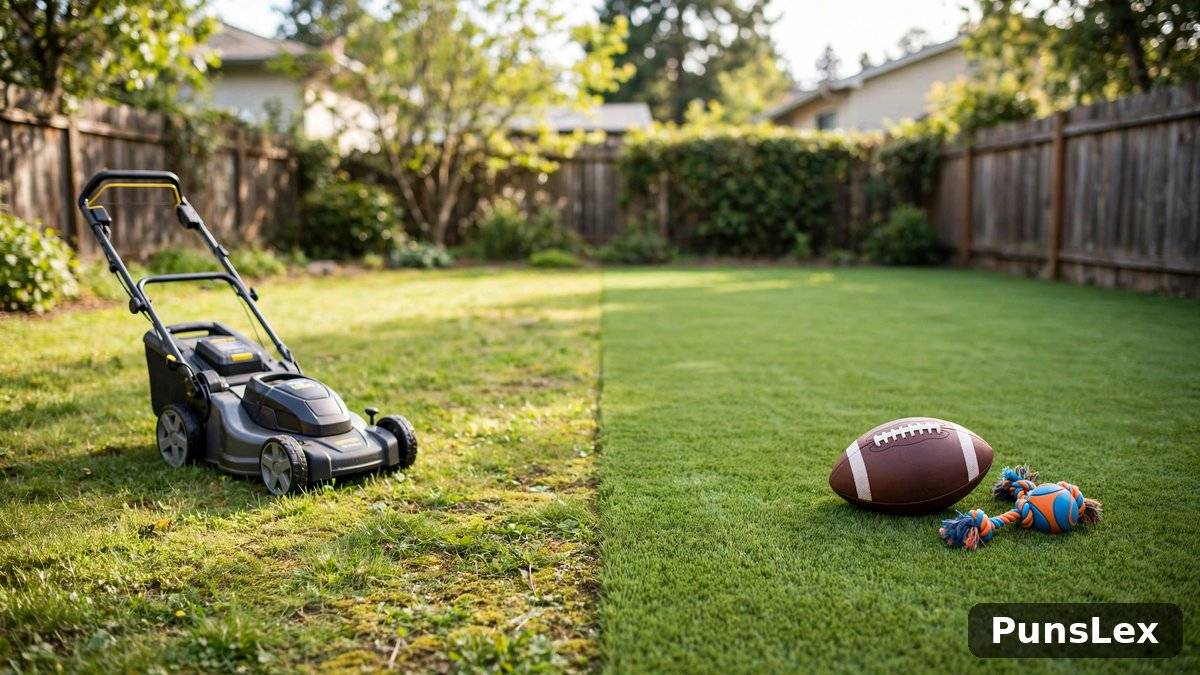
The artificial grass vs natural lawn debate tends to start on a Saturday morning. One neighbour is mowing careful stripes; the other is rinsing down a surface that looks the same in January as it does in July.
Both sides have a genuine case. Natural grass is cheaper to install, cooler underfoot, and alive in ways plastic can never be. Artificial turf asks for serious money upfront, then quietly removes mowing, watering, and reseeding from your life.
The honest answer depends on your climate, your household, and how you value your weekends. Below is a side-by-side look at cost, water, upkeep, comfort, and lifespan, so you can match the surface to the way you actually live.
How the Two Options Actually Compare at a Glance
Before weighing any single factor, it helps to see both surfaces side by side. The figures below are typical US ranges, not quotes; your region, yard size, and product quality will move them.
| Factor | Natural Grass | Artificial Grass |
|---|---|---|
| Upfront cost (installed) | Seed under $1 per sq ft; sod roughly $1–$2 per sq ft | Roughly $6–$17 per sq ft |
| Annual upkeep cost | Ongoing: water, feed, fuel, repairs | Low: cleaning and occasional infill care |
| Water use | High; lawns take over half of outdoor household water | Near zero after installation |
| Maintenance time | Around 70 hours a year for the average homeowner | A few hours a year |
| Lifespan | Indefinite with continuing care | Typically 15–20 years |
| Surface heat | Rarely above 100°F | Runs 35–55°F hotter than grass in sun |
| Pets and heavy play | Bare patches and mud under pressure | Durable, drains fast, no mud |
| End of life | Organic and compostable | Plastic; recycling options still limited |
Two patterns stand out. Natural grass spreads its cost over years of upkeep, while artificial grass concentrates cost at installation and then coasts. Everything else in this comparison follows from that trade.
The True Cost of Each Option Over Time
Artificial turf’s sticker shock is real. Angi’s project data puts professional installation at roughly $6 to $17 per square foot, so a modest 500-square-foot backyard often lands between $3,000 and $8,500. Checking current artificial turf installation cost data before collecting quotes keeps expectations honest.
Natural grass starts far cheaper. Sod typically runs about $1 to $2 per square foot installed, and seed costs less still. The catch is that a natural lawn is a subscription: water, fertiliser, weed control, mower fuel, and repairs, every year, indefinitely.
That is why the break-even conversation matters more than the installation quote. Households that pay for lawn services often find turf crossing over within the decade. Keen DIY gardeners, whose labour is effectively free, may never see it cross at all.
How Long Each Surface Actually Lasts
A well-kept natural lawn has no expiry date. Grass renews itself season after season, and a tired patch can be overseeded or re-sodded for a fraction of the original cost. Its lifespan is measured in decades, provided the care continues.
Artificial turf is a product with a service life. Most quality installations are expected to last around 15 to 20 years before fibres flatten, seams tire, and the surface begins to look worn. Warranties usually run shorter than the optimistic lifespan figures.
What wears out first is rarely the whole lawn. On natural grass it is the high-traffic paths and shaded corners. On turf it is the busiest play zones, where pile crushes and infill migrates long before quieter edges fade.
Water Use: A Factor That Matters More Than Ever
The US Environmental Protection Agency estimates that about 30 percent of household water is used outdoors, and in dry climates that share can reach 60 percent. Lawns and gardens take more than half of that outdoor water, which is why EPA WaterSense guidance on saving water outdoors is worth reading before you commit to either surface.
The EPA also estimates that as much as half of irrigation water is wasted through evaporation, wind, and runoff. A thirsty lawn in a tiered-pricing water district is not just an environmental issue; it is a monthly bill with a long memory.
Artificial grass removes nearly all of that. Beyond an occasional rinse to clear dust or pet waste, it asks for no irrigation at all, which is why water districts in drought-prone states sometimes offer rebates to residents who convert.
Maintenance Requirements and Day-to-Day Reality
Natural lawn care runs on a calendar: mowing weekly through the growth season, feeding in spring and autumn, weed treatments, aeration, overseeding, and irrigation checks. Skip a month in summer and the lawn advertises your absence to the whole street.
Turf deletes most of that list. What remains is housekeeping: blowing or brushing off leaves, rinsing pet areas, and occasionally brushing fibres upright or topping up infill where it has compacted or scattered.
Neither surface is truly maintenance-free. The real difference is the type of work involved. Natural grass demands regular, scheduled effort, while artificial grass asks for light, occasional tidying that can safely wait for a free afternoon.
The Hours Nobody Counts: What Your Time Is Worth
Money is easy to compare; time is not. An estimate drawn from the American Time Use Survey, widely cited by university extension services, puts the average homeowner’s lawn care at roughly 70 hours a year.
That is nearly two working weeks, every year, spent mowing, edging, watering, and spraying. Stretched over a 15-year span, it adds up to more than 1,000 hours — time that artificial turf mostly hands back to you.
Not everyone experiences those hours as a cost. Plenty of people garden for pleasure and would genuinely miss the ritual. The honest question is whether you are one of them, or whether the mower mostly comes out under protest.
Performance With Pets, Kids, and Heavy Use
Heavy use is where natural grass shows its limits first. Dog runs, goalmouths, and the route to the shed wear into bare, muddy tracks, and regrowing them means fencing the area off while seed establishes — usually just as the family wants it back.
Artificial turf shrugs off that punishment. It does not thin, rut, or turn to mud after rain, and modern pet-specific products drain quickly and rinse clean. For multi-dog households, that reliability is often the deciding factor on its own.
Children change the calculation slightly. Turf gives a consistent, even playing surface all year, but it offers less cushioning than soft soil and grass unless a shock pad is fitted beneath it — worth specifying for dedicated play areas.
Heat, Drainage, and Mud: The Comfort Factors
Heat is artificial turf’s most honest weakness. Penn State’s turf temperature research has found synthetic surfaces running 35 to 55°F hotter than nearby natural grass, with surface readings around 175°F recorded in strong summer sun.
Natural grass rarely exceeds 100°F at the surface, because living leaves transpire and cool themselves. A quick spray of water cools turf noticeably, but studies show the temperature rebounds within minutes once the watering stops.
Drainage cuts the other way. A properly built turf base drains fast and evenly, so the yard is usable soon after a storm. Natural lawns drain well on sandy soil, but on clay they can hold puddles and mud for days.
Environmental Considerations Worth Knowing
A living lawn does quiet ecological work: roots hold soil together, support microbes and insects, absorb rainfall, and cool the air around the house. Managed with restraint, natural grass is genuine habitat, not just decoration.
The conventional version of that lawn is less innocent. Fertiliser runoff feeds algae in waterways, petrol mowers emit fumes, and heavy irrigation strains dry regions. How a lawn is kept matters almost as much as which surface is chosen.
Turf’s footprint is front-loaded and plastic: mostly polyethylene fibres over a crushed-stone base, and difficult to recycle at end of life. Some manufacturers now run take-back schemes, but they remain the exception, so ask about disposal before you buy.
What Happens at Resale: How Buyers See Each Lawn
Sellers often ask whether turf helps or hurts a sale. The truthful answer is that it depends on the buyer and the neighbourhood. In water-stressed suburbs, a green, tidy, low-upkeep yard reads as a feature rather than a compromise.
In greener regions, some buyers still prefer living grass, particularly families picturing gardens and room to play. A tired, ageing turf near the end of its life can read as a future bill, much like an old roof.
Natural lawns photograph beautifully when healthy, and can look neglected within weeks when they are not. Either way, the condition of the yard at the moment of sale matters more than the material it is made from.
Key Questions to Ask Before Making a Decision
Run through these questions honestly before requesting quotes. Your answers usually point toward one surface quite clearly.
- How much rain does your area get, and what does irrigation actually cost you each summer?
- Will dogs or children use the lawn hard, all year round?
- How many hours a week are you realistically willing to give to lawn care?
- Is the yard in full sun for most of the day, or mostly shaded?
- What can you spend upfront, and what are you willing to keep spending each year?
- Does your water district offer rebates for replacing grass with turf?
- What lifespan and warranty does any turf product you are considering actually carry?
Artificial grass vs natural lawn has no universal winner. Turf suits households short on time and water, with heavy pet or play use. Living grass suits gardeners, cooler climates, and anyone who values a surface that stays cool and alive.
Price both options over fifteen years, and count your hours as carefully as your dollars. Do that, and the right choice for your yard usually becomes obvious.