
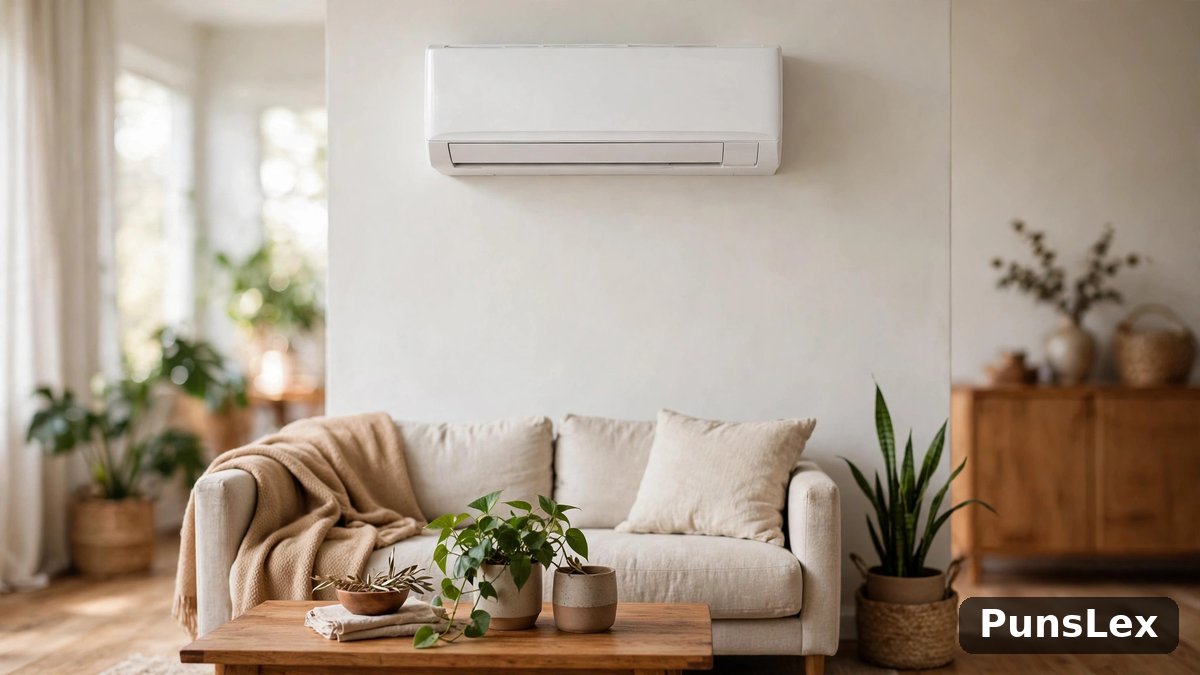
Ductless Mini Splits: The Smarter Way to Heat and Cool Your Home
Type ductless mini splits the smarter way to heat and cool your home into a search engine and you will be buried in product pages. What is harder to find is a plain explanation of why these systems work, and when they do not.
I spend a lot of time in houses where one room roasts while another freezes, and a mini split is often the honest fix. One outdoor unit, one or more indoor heads, and no ductwork in between.
This guide walks through the mechanics, the efficiency ratings, and the cold-weather fine print. It also covers the cases where sticking with ducts is the better call, because no system is right for every house.
What Makes Ductless Mini Splits Different?
A central system makes hot or cold air in one place, then pushes it through a network of ducts to every room. A mini split skips the delivery network entirely and does the work right in the room where you feel it.
Each indoor head has its own thermostat, so the living room can sit at one temperature while a bedroom stays cooler for sleep. One outdoor unit can feed several heads, and some systems support as many as eight zones.
That independence is the real difference. You condition the rooms you are using, at the temperatures you actually want, instead of treating the whole house as one compromise.
How a Mini Split Actually Works: Moving Heat, Not Making It
A mini split is a heat pump, which means it moves heat rather than creating it. In summer, refrigerant absorbs heat from the indoor air and dumps it outside. In winter, the cycle reverses and pulls heat from the outdoor air, even when that air feels cold.
The compressor is driven by an inverter, so it speeds up and slows down continuously instead of switching fully on and off. That gentle ramping holds temperatures steadier and uses less energy during the many hours when only a little heating or cooling is needed.
Heat travels between the units through a slim pair of copper refrigerant lines, not through bulky ducts. Most new models now run on lower-global-warming-potential refrigerants such as R-454B or R-32, following the phase-out of R-410A in new equipment.
Energy Efficiency That Pays for Itself
The first saving comes from what is missing. The U.S. Department of Energy and ENERGY STAR estimate that duct losses can account for more than 30 percent of the energy used for space conditioning, especially where ducts run through hot attics or cold crawl spaces.
The second saving comes from zoning. A spare room that sits empty all week does not need to be held at comfort temperature, and with a mini split, it simply is not.
Be skeptical of anyone who promises a fixed percentage off your bills, though. Real savings depend on your climate, your electricity rates, and what system you are replacing. The efficiency is real; the exact payback is personal.
SEER2 and HSPF2, Decoded: Reading the Ratings That Matter
SEER2 measures seasonal cooling efficiency, and HSPF2 measures seasonal heating efficiency. Both arrived in January 2023 under a tougher federal test procedure that better reflects real ductwork resistance, which is why SEER2 numbers read slightly lower than old SEER numbers for identical equipment.
The federal floor for a new split-system heat pump is 14.3 SEER2 and 7.5 HSPF2, while ENERGY STAR’s heat pump criteria ask for 15.2 SEER2 and 7.8 HSPF2. The best single-zone ductless models rate above 30 SEER2.
Treat those numbers as a starting point, not a verdict. Ratings are earned by a specific matched indoor and outdoor combination in a test lab, so check the AHRI certificate for the exact pairing you are quoted.
Cold-Climate Performance: What Happens Below Freezing
Older heat pumps faded badly as temperatures fell, which is why many northern homeowners still distrust them. Modern cold-climate models use enhanced vapor injection and better compressors to keep producing useful heat far below freezing.
The label that proves it is ENERGY STAR Cold Climate. To earn it, a heat pump must still deliver at least 70 percent of its 47-degree capacity at 5 degrees, at a COP of 1.75 or better, verified with the unit’s own controls. A cold-climate heat pump product list makes those models easy to find.
Some manufacturers go further: Mitsubishi rates its Hyper-Heating models at up to 100 percent of capacity at 5 degrees, with operation down to minus 13. Shop by capacity at 5 degrees, not by the lowest brochure temperature, and size for your design temperature. In the coldest regions, a backup heat source is cheap insurance for a few extreme nights.
Installation Without the Mess
With no ductwork to build, installation is mostly mounting work. The installer hangs the indoor head, drills a hole of roughly three inches for the refrigerant lines, condensate drain, and wiring, then sets the outdoor unit on a pad or wall bracket.
A single-zone install is often finished in a day. Multi-zone systems take longer, mostly because each head needs its own line set routed back to the outdoor unit.
It is still skilled work. Refrigerant handling requires certification, most installs need a dedicated electrical circuit and a local permit, and condensate drainage has to be planned properly. A careless drain line causes more callbacks than almost anything else on these systems.
Perfect for Additions and Hard-to-Heat Spaces
Additions, garage conversions, sunrooms, and finished attics usually were never connected to the home’s duct system. Extending ducts into them can be impractical, expensive, or more load than the existing system was built to carry.
One head solves the one problem room without replacing anything else. Historic homes benefit the same way, since there is no ductwork to carve through original plaster, beams, and trim.
Home offices and primary suites are the other classic case. The rooms where you spend the most hours get their own control, instead of depending on a thermostat down the hall making decisions for the whole floor.
When a Ducted System Still Wins
Honesty matters here: if your ducts already run inside conditioned space and are well sealed and insulated, the duct-loss argument mostly evaporates. A good central heat pump may then be the simpler whole-home answer.
Ducts also handle whole-home ventilation and deep filtration more easily, and a large open-plan house might need so many indoor heads that the cost advantage disappears. Some homeowners simply dislike the look of a wall-mounted head.
The working rule is straightforward. Mini splits shine where ducts are absent, leaky, or impractical. Where good ducts already exist, get quotes for both approaches and compare them on your actual layout.
Quiet Comfort, Customized to You
The loudest thing about a mini split is how little there is to hear. The quietest indoor heads are rated as low as 19 decibels on their lowest fan setting, which is softer than a whisper and far below the rumble of a typical ducted system kicking on.
Every zone gets its own remote, and many models add Wi-Fi control, phone apps, and scheduling. You can warm the bedroom before you get up and let the guest room idle while nobody visits.
There is a comfort quality benefit, too. Because an inverter system runs long and low instead of blasting in short bursts, it avoids temperature swings and pulls more moisture from the air on humid summer days.
Why Your Choice of Installer Matters
Correct sizing starts with a Manual J load calculation, not a rule of thumb based on square footage. Oversizing costs more upfront and can leave summer humidity unmanaged, while undersizing only reveals itself on the coldest night of the year.
Ask how the installer sizes for cold weather, what line-set lengths your layout needs, and who registers the warranty. Working with experienced mini-split installers who service what they sell is worth more than a small discount from a crew you will never see again.
A careful installation protects the efficiency you paid for. Proper vacuuming of the lines, verified refrigerant charge, and a tested condensate drain are unglamorous details that decide how the system behaves five years from now.
Conclusion
Ductless mini splits earn their reputation in the houses where ducts are missing, leaky, or impossible: zoned comfort, strong efficiency ratings, and cold-weather performance that the current labels actually verify.
Choose the right capacity, read the ratings with clear eyes, and hire for care rather than price alone. Do those three things and a mini split tends to disappear into daily life, which is exactly what good heating and cooling should do.