
How to Elevate Your Winter Looks: Outfit Tips for Every Cold-Weather Occasion
If you have been hunting for how to elevate winter looks outfit tips that survive real weather, you are not alone. By midwinter, most of us rotate the same coat, jumper and boots and hope nobody notices.
The problem is rarely your wardrobe. It is the season: darkness by five, pavements like ice rinks, and a diary full of events that each seem to want a different version of you.
I work as a stylist, and my winter method is boringly practical. Build a few base outfits you trust, adjust them per occasion, and get the mechanics underneath right: layering order, proportion, colour and footwear.
Tips to Elevate Your Winter Looks
These eight tips follow the occasions winter actually throws at you, from weddings to market days. Each one assumes you are dressing from a normal wardrobe, not a stylist’s rail, and that warmth is non-negotiable.
1. Build Three Base Outfits First
Choose three outfits you could put on half-asleep: a knit dress, tailored trousers with a fine knit, and dark jeans with a good top. These are your defaults when an invitation lands at short notice.
The elevating happens in the swaps. Change the coat, boots, bag or jewellery and the same base reads as work, dinner or party. You are styling one outfit three ways, not inventing three outfits.
Keep the three bases steamed, mended and ready to wear. An outfit that needs ironing or a missing button will lose to the same old jumper every single time.
2. Weddings: Plan for the Cold, Not Just the Photos
A winter wedding means a chilly church or register office, a warm reception and a cold walk between the two. Dress for all three, not just the photographs. Sleeves, a wrap or a tailored jacket you can shed indoors all help.
Opaque tights are the quiet workhorse here: they warm bare legs without changing the dress. If the ground is wet or uneven, travel in block-heeled boots and carry your heels for the reception floor.
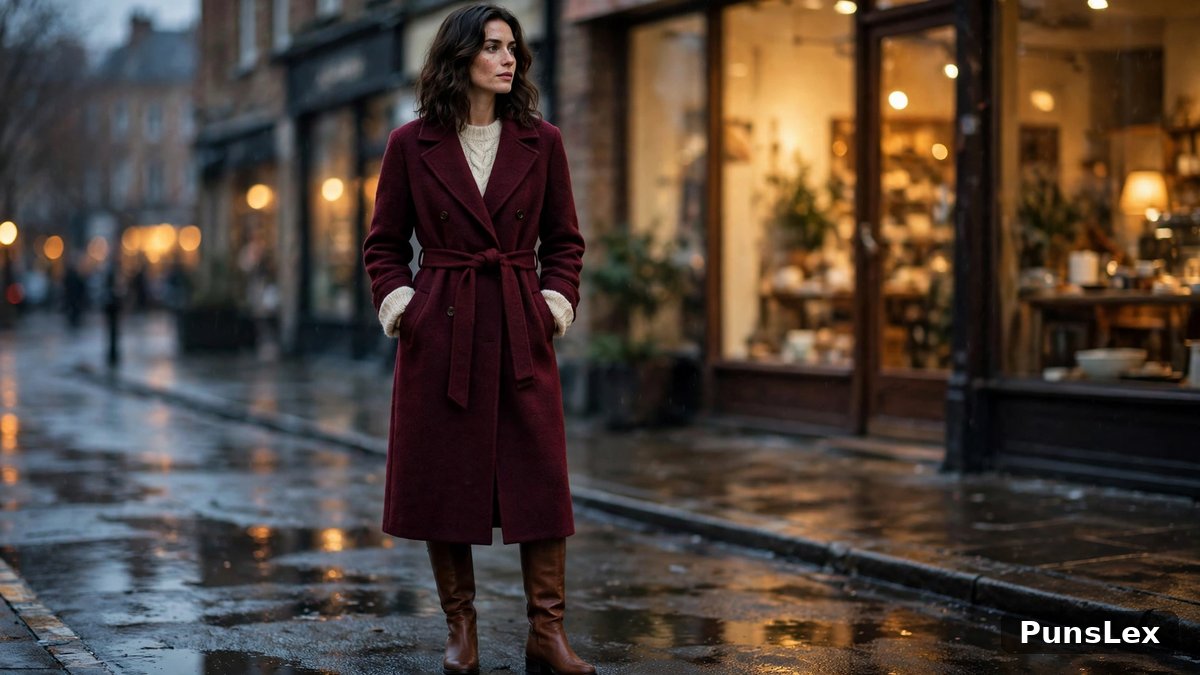
Choose a coat that respects the outfit: a long wool coat over a midi dress looks intentional, while a short puffer fights it. Rich colours — navy, forest green, burgundy — photograph beautifully in flat winter light.
3. Work Events: Smart Without Being Stiff
Office parties and client dinners sit between work and play, so dress slightly smarter than a normal day. A knitted co-ord, tailored trousers with a satin shirt, or a midi skirt with polished boots all land in the right zone.
Accessories work best with a hierarchy: one piece leads, the rest support. Statement earrings or a metal belt buckle, never both fighting. A tight edit of versatile winter accessories is worth more than a drawer of options.
A structured blazer over the top keeps everything professional when you arrive. Take it off once you are settled and the outfit relaxes with you.
4. Party Outfits: Pair Shine With Something Matte
Sparkle works best when it is balanced by something plain. A sequin top sharpens up with simple trousers; a metallic skirt calms down with a soft, matte knit. One statement piece reads as deliberate, three read as costume.
Mind the journey between venues. A faux-fur or leather jacket keeps the look going outdoors, where a borrowed coat over sequins kills it. And choose boots you can genuinely dance in until the last song.
5. Date Night: Mix Your Textures
Texture contrast is the cheapest elegance there is. Pair soft with sleek: a leather skirt with a brushed knit, or a satin slip dress under a chunky cardigan. Your eye reads the difference as effort, even in one colour.
Comfort is part of the effect. Pick something you can sit in through a long dinner without adjusting it every five minutes. Knee-high boots add polish and quietly keep your legs warm on the way home.
6. Valentine’s Day: Choose Feel-Good Over Cliché
Red is optional, whatever the card shops say. Burgundy, blush, soft pink and classic black all read as romantic, and confidence does more than any colour. Wear the outfit you already know suits you.
For dinner, a dress with boots and delicate jewellery is warm and finished. For a daytime date, jeans, a soft knit and ankle boots work, with a red lip as the one deliberate nod to the occasion.
7. Day Trips and Markets: Layer in Three Stages
Cold days outdoors are easier in three stages: a thin thermal or fitted top, a knit or fleece over it, then a padded or waterproof coat. Each stage traps air, and you can shed one as the day warms up.
Boots with grip and proper warm socks matter more than the coat here; cold rises from the ground. Add a hat, scarf and gloves you can stuff in a pocket when the café stop comes.
8. Prepare for the Next Season Now
Winter shows you the truth about your wardrobe. Notice which pieces you reach for weekly and which stay on the hanger untouched. Write down the gaps while you can still see them clearly.
Lightweight jackets — trench, denim, leather — ankle boots and lighter knits bridge the gap into spring. Before storing winter pieces, wash knitwear, condition leather boots, brush suede and empty every pocket.
End-of-season sales are the cheapest way to fix next winter. Buy the gap pieces you listed, in your size, while everyone else is shopping for spring.
Layer in the Right Order: Thin, Warm, Then Weatherproof
The order matters as much as the number of layers. Start thin and fitted against the skin, because a baggy base leaves cold air pockets. Merino or synthetic thermals beat cotton, which holds sweat and turns chilly.
The middle layer does the insulating — a knit, fleece or light padded gilet that traps warm air. If you are unsure what counts, a simple guide to choosing the right mid-layer for winter helps you match weight to temperature.
Finish with the weatherproof shell: your coat’s job is blocking wind and rain, not providing all the warmth. Splitting the jobs this way means one good coat works over everything you own.
Balance Proportions When Your Coat Does the Talking
A heavy coat adds volume, so balance it deliberately. If the coat is long and wide, keep what shows below it slim: straight trousers, a pencil or column skirt, or boots close to the leg.
Shorter coats flip the rule: they can carry a wider trouser or a fuller skirt underneath. The aim is one area of volume per outfit, so the shape looks chosen rather than accidental.
A belt over a coat defines the waist you lose under padding, and it works on wool coats and trenches alike. Match the belt’s weight to the coat so it holds rather than slides.
Use Colour Deliberately in Low Winter Light
Winter light is weak and grey, and it drains colour from outfits by four in the afternoon. Saturated shades hold up best: burgundy, bottle green, deep teal and true navy still read as colour after dark.
Keep your strongest colour near your face, where people actually look. A scarf or jumper in a shade that flatters you does more for a tired January complexion than any new foundation.
Head-to-toe one colour is the other reliable trick, but vary the textures or it falls flat. Black on black works when matte wool sits against leather and a slight sheen at the neckline.
Choose Footwear That Survives the Weather
Beautiful boots that leak are a bad outfit by lunchtime. For wet months, choose leather you can treat or properly waterproof styles, with soles that have real tread rather than smooth fashion soles.
Salt is the silent killer: it stains leather and dries it out. Wipe boots down when you get in, let them dry away from radiators, and feed the leather regularly; a simple leather boot care routine once a month keeps them alive for years.
Rotate two pairs rather than wearing one pair daily. A rest day lets the lining dry fully, which is what stops winter boots smelling by February and collapsing by March.
Bottom Line
Elevating a winter look is planning, not spending. Three base outfits, adjusted per occasion, on top of sound layering, proportion, colour and footwear will carry you through the season.
Start with the bases this week and fix one mechanic at a time. By the next invitation, getting dressed will feel like a system instead of a scramble.