
How to Check a Used Car Before You Buy: A 20-Point Inspection List
Knowing how to check a used car before buying is the difference between a bargain and somebody else’s repair bill. The car in the advert is washed, photographed kindly and described generously. Your job is to find the real car underneath all of that.
I have bought cars that turned out beautifully, and one that taught me an expensive lesson in a single winter. The difference was never luck. It was whether I slowed down and checked the boring things, in the right order, before money moved.
What follows is the order I use now: desk checks before you travel, a slow walk around the car, a proper test drive, then the paperwork. Twenty checks in all, and none of them needs a mechanic’s training — just patience and a sequence.
Before You View: Desk Checks That Save Wasted Trips
Ask the seller for the VIN — the car’s 17-character identity code — before you go anywhere. A seller who will not share it has already told you something important. Run the number through a free VIN decoder to confirm the car matches its description: make, model, year and engine.
Then compare the advert against itself. Photos showing different plates, a mileage figure that changes between the listing and the messages, or a specification that does not match the VIN decode all deserve a question before you spend fuel on the trip.
Finally, line up your questions: why are they selling, how long have they owned it, what has been replaced, and is anything still owed on the car? Straight answers now tend to predict straight dealing later.
Exterior and Bodywork: Reading the Panels
View the car in daylight, dry if you can manage it. Rain and forecourt lighting hide dents beautifully. Walk a slow circle, then crouch and look along each side: ripples in the reflection usually mean filler, and a repair the seller may not have mentioned.
Check the gaps around the doors, hood and trunk. Even gaps suggest original panels; one wide or tight gap suggests something was removed, repaired or replaced. Paint that changes shade between one panel and the next tells the same story.
Rust matters most where it is structural: sills, wheel arches and the bottoms of doors. Light surface bubbling is cosmetic bargaining material. Flaking metal, holes, or panels that feel soft under thumb pressure are a reason to walk away.
Tires and Wheels: Tread, Wear Patterns and Age
Tread depth is the easy part. Legal minimums sit around 1.6 mm across the UK and Europe, and tires anywhere near the limit are a cost arriving within months. Uneven wear — one edge scrubbed, or the center worn smooth — points to alignment or suspension trouble instead.
Now read the sidewall date code, the check most buyers skip. The last four digits of the code after the letters DOT give the week and year the tire was made: 2319 means week 23 of 2019. Rubber hardens with age, whatever the tread looks like.
Many makers suggest replacing tires by around ten years old even with tread remaining. Four matching, sensibly aged tires suggest a cared-for car. One ancient spare or a mix of budget brands suggests maintenance done cheaply, and done late.
Under the Hood: Fluids, Belts and Honest Dirt
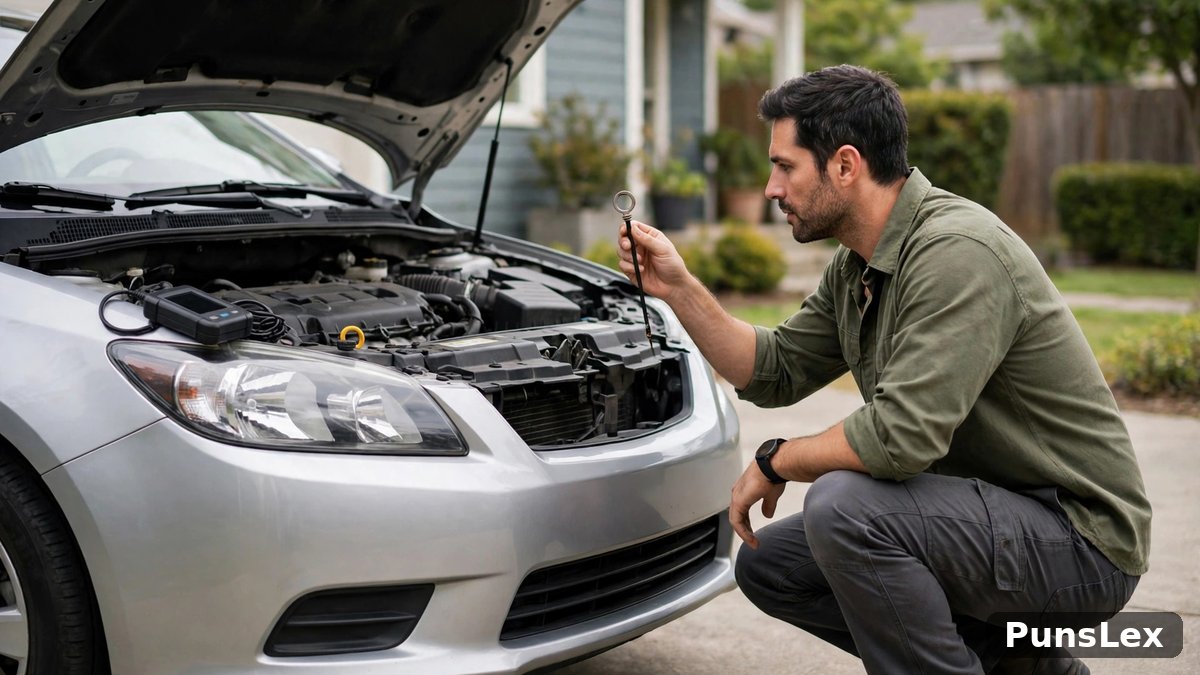
With the engine off and cool, lift the hood. A little road dust is honest. A bay steam-cleaned to a shine can be hiding leaks, and fresh wet patches under hoses or along seams are worth a photograph and a pointed question.
Pull the dipstick. The oil should sit between the marks and feel slippery; oil that looks like milky coffee suggests coolant mixing where it should not. The coolant itself should be clean and colored, not brown sludge, and sitting at its mark.
Look at belts for cracks and fraying, and battery terminals for heavy corrosion. Once the engine runs, listen: you want a steady idle, with no knocking, tapping or whining. You are not diagnosing — you are deciding whether the car earns a closer look.
Start It Cold: The Check a Warm Engine Can Hide
Arrange to arrive before the seller starts the car, and say so plainly. If the hood is warm when you get there, the engine has been run, and you should ask why. A cold start is the most honest thirty seconds of the whole viewing.
From cold, a healthy engine catches quickly, settles to a steady idle and clears its throat fast. Blue smoke that lingers, a rattle that fades as oil circulates, or long, reluctant cranking all show up cold — and can vanish completely once the engine is warm.
This is also when a weak battery confesses. A car that starts eagerly after a cold night is telling the truth. One that needs a jump pack before your test drive is telling it too.
Inside the Cabin: Wear, Smells and Every Switch
Sit in every seat, but judge the driver’s. A shiny steering wheel rim, a collapsed seat bolster and pedal rubbers worn smooth should all match the odometer. Low mileage combined with heavy wear means the numbers and the car disagree.
Work every switch: windows, locks, mirrors, lights, wipers, heater, air conditioning, heated seats, the lot. Electrical faults are the classic small-print expense of older cars, and each dead feature is either a discount or a warning, depending on the cause.
Smell the car while you are in there. Damp and mustiness point to water getting in, so lift the mats and check the spare wheel well for moisture. Heavy air freshener in a closed car is a question, not an answer.
Plug In an OBD Scanner: What the Dashboard Is Not Telling You
Every modern car has a diagnostic socket, usually under the dashboard near the steering column, and a basic scanner costs less than a tank of fuel. Plug in before the test drive and read what the car has stored about itself.
You are looking for two things: fault codes, stored or pending, and readiness monitors showing as incomplete. A seller can clear codes with the same cheap tool, but the monitors take real driving to reset — so a freshly cleared car often gives itself away.
A clean scan does not prove a healthy car, and one old code does not condemn it. Treat the results as questions for the seller, and as notes for the mechanic who carries out your independent inspection.
The Test Drive: Twenty Minutes That Tell the Truth
Refuse the five-minute loop around the block. You want twenty minutes or more: slow streets, a rough surface, a faster road, a hill if you can find one, and a parking lot for full-lock turns and a reverse.
Turn the radio off and listen. Note clunks over bumps, a hum that rises with speed, grinding under braking, or a whine in one gear. Feel for pulling under braking, vibration through the wheel, and an automatic gearbox that hesitates or thuds between gears.
At the end, let the car idle and check the temperature gauge sits steady. Then look underneath where it was parked. Fresh drips on clean pavement are the car’s parting comment, and worth hearing before any money moves.
Paperwork and History: Match the Car to Its Documents
The VIN on the documents must match the VIN on the car — at the base of the windshield, on the door jamb sticker, wherever it is stamped. Every character, no exceptions. A mismatch is not a negotiation point; it is the end of the viewing.
Order a full vehicle history report from a reputable provider rather than trusting a printout the seller hands you. You want accident records, title or write-off brands, theft and finance flags, and the mileage trail over time. Reports only show what was reported, so a clean one supports your checks rather than replacing them.
Check the seller’s name against the registration document, and meet at the address on it where you can. Rights differ sharply between dealer and private sales, and they vary by country and state, so know which kind of sale yours is before relying on any protection you think you have.
Verify the Service History, Don’t Just Read It
A stamped service book is evidence, but stamps are cheap. Pick two or three entries and call the garages named: a real workshop can usually confirm the date, the mileage and the work done from its own records within a minute.
Read the history as a graph. Mileage should climb steadily between services and inspections, oil changes should land at sensible intervals, and big items — timing belt or chain service, gearbox oil, brake fluid — should appear when the maker’s schedule says they should.
Gaps are not automatic disqualifiers, especially on older cars, but they change the price conversation. Undocumented years are years you are buying blind, and your offer should say so.
Seller Red Flags That Matter More Than the Car
Some warnings are about the person, not the vehicle. A seller who refuses a test drive, an independent inspection, or simply time to think is asking you to carry all of the risk — and the honest response is to decline politely and leave.
Watch for the title or registration sitting in somebody else’s name, a story that changes between messages, or a meeting arranged anywhere except the seller’s own address. Each has an innocent explanation occasionally. Together, they describe a pattern.
Pressure is the loudest flag of all: another buyer coming tonight, a price that expires today, a deposit demanded before you have seen a single document. Good cars survive a night’s sleep. Sellers who fear one are telling you why.
Book an Independent Inspection Before You Commit
Whatever your own checks find, a pre-purchase inspection by a mechanic who works for you — not the seller — is the best money in the whole process. On a lift, with a scanner and a work light, concealed rust, leaks and old repairs stop being opinions.
It matters most on private sales, older cars and anything with patchy history, but even a tidy car benefits. A written list of upcoming work is either peace of mind or precisely the evidence your final offer needed.
If the seller refuses, you have your answer. If they agree, choose the workshop yourself and book it before you discuss final numbers.
Negotiate With Evidence, Not Emotion
Research the market before you view, using a used car valuation tool and similar cars advertised nearby, so your offer starts from evidence. Then negotiate on specifics: tires near the limit, a service due, a fault your scan found. Itemized costs beat vague haggling.
Stay courteous, and stay willing to leave. The strongest position in any negotiation is a genuine alternative, and there is always another car. Decide your ceiling before you arrive, and let the inspection findings — not the driveway atmosphere — move it.
The 20-Point Checklist on One Page
Everything above, compressed into the order I actually work through:
- Get the VIN before you travel, and decode it against the advert.
- Prepare your questions: ownership length, reason for sale, outstanding finance.
- View in daylight, dry, and walk a slow circle first.
- Check panel gaps and paint shades from panel to panel.
- Inspect sills, arches and door bottoms for structural rust.
- Measure tread and read the wear pattern on all four tires.
- Read the DOT date codes, and note any tire past its sensible years.
- Check the fluids: oil level and color, coolant level and cleanliness.
- Look for leaks, frayed belts and corroded battery terminals.
- Confirm the engine is cold before the first start.
- Watch the exhaust and the idle during that cold start.
- Test every switch, light and electrical feature inside.
- Compare cabin wear against the odometer reading.
- Run an OBD scan; note codes and incomplete readiness monitors.
- Drive at least twenty minutes across mixed roads.
- Brake firmly, turn at full lock, reverse, and listen throughout.
- Match the VIN on the car to the VIN on the documents.
- Order your own history report; check mileage, title and finance flags.
- Verify two service stamps with the garages that made them.
- Book an independent inspection before agreeing the final price.
Conclusion
None of these checks needs expertise — only sequence and patience. Desk work first, then the car, then the documents, then a mechanic’s eyes. Each stage either builds your confidence or hands you a fair reason to adjust the price, or to walk away.
The best used car is rarely the cheapest one on the page. It is the one whose story checks out at every stage. Buy the car that survives your list, and it will usually repay the hour you spent checking it.