
How to Choose a Shoyoroll Gi That Fits Your Training
The easiest way to choose the wrong Shoyoroll gi is to shop from the shoulders up. A clean patch or a color you’ve been waiting for can make the decision feel settled. Then the gi arrives, and the pants sit too low when you squat or the jacket pulls when you reach across your body. Those are the details you’ll notice in a round, long after you’ve stopped thinking about the product photos.
Start with three things you can check before you buy Shoyoroll Gi. Know your gym’s uniform rules, measure a gi that already fits, and decide where you’ll wear the new set most often. A uniform for a hot evening class has a different job from the one you pack for a tournament. Once you know the job, Shoyoroll’s model names, fabric specs, and size labels are easier to make sense of.
Start with your training week
Think about the last few weeks at your gym. How often did you train in the gi? How many of those classes were on back-to-back days? If you wash your gear after every session and a jacket takes a full day to dry, the most useful purchase may be a set that fits your laundry schedule. A second gi in a cut you like can make a bigger difference to your week than paying extra for a color you’ll save for special sessions.
Check what your academy allows before you get set on a design. Some gyms ask for a white gi, restrict patches, or require students to wear an academy uniform. If you travel for open mats, a plain set is often easier to pack, but a host gym can have its own rules. Ask whether the jacket and pants need to match and whether there are restrictions on large patches. The answers can narrow your choice before you even open a size chart.
Then decide what you’d like to change about the gi you own. Perhaps the jacket fits across your chest, but the cuffs ride high as soon as you extend your arms. Maybe the pants fit at the waist but feel tight when you sit on your heels. Naming the issue helps you ask for the right measurements. The solution may be a longer sleeve or a roomier seat, which a jump to the next standard size may change along with everything else.
Compare the exact Shoyoroll release
Shoyoroll describes the Competitor as a midweight model for training and competition. It’s a useful starting point if you want a jacket with some structure and you like the brand’s familiar patchwork. Look up the specific release when you shop. A model family can span more than one cut or fabric combination, and a used listing may show a version with different materials from the one you tried at the gym.
The Comp Standard is a competition-focused family with a simpler look. One release, the Vein Comp Standard, pairs a 450 GSM pearl weave jacket with 10-ounce canvas pants and an elastic waistband. The waistband is an easy detail to overlook in photos. If you prefer a traditional drawstring or need to follow a uniform rule, check how the waist is built before you order. The same goes for the WAZAir 2.0. It uses diamond ripstop on both pieces and has an elastic waistband. Shoyoroll flags that release as ineligible for IBJJF competition, so it makes more sense to consider it for training.
For a gi with an older look, the Beast Retro revisits the original Beast Kimono with prominent graphics. The draw is the design and the link to an earlier Shoyoroll batch. Shoyoroll also flags the Beast Retro as ineligible for IBJJF events. If you like what you see, picture how you’d use it in an ordinary week and check what your gym allows. That makes it easier to decide whether the design earns a spot in your rotation.
Measure the jacket and pants separately
Start with the size chart for the model and use your own height and weight. Shoyoroll says its cotton gis can fit roomy and may still shrink with washing and drying even though they come preshrunk. Treat the chart as a starting point, particularly if you’re between sizes or buying a release you’ve never tried before. A measurement from a gi you’ve already washed and worn will often tell you more about your preferences than a label alone.
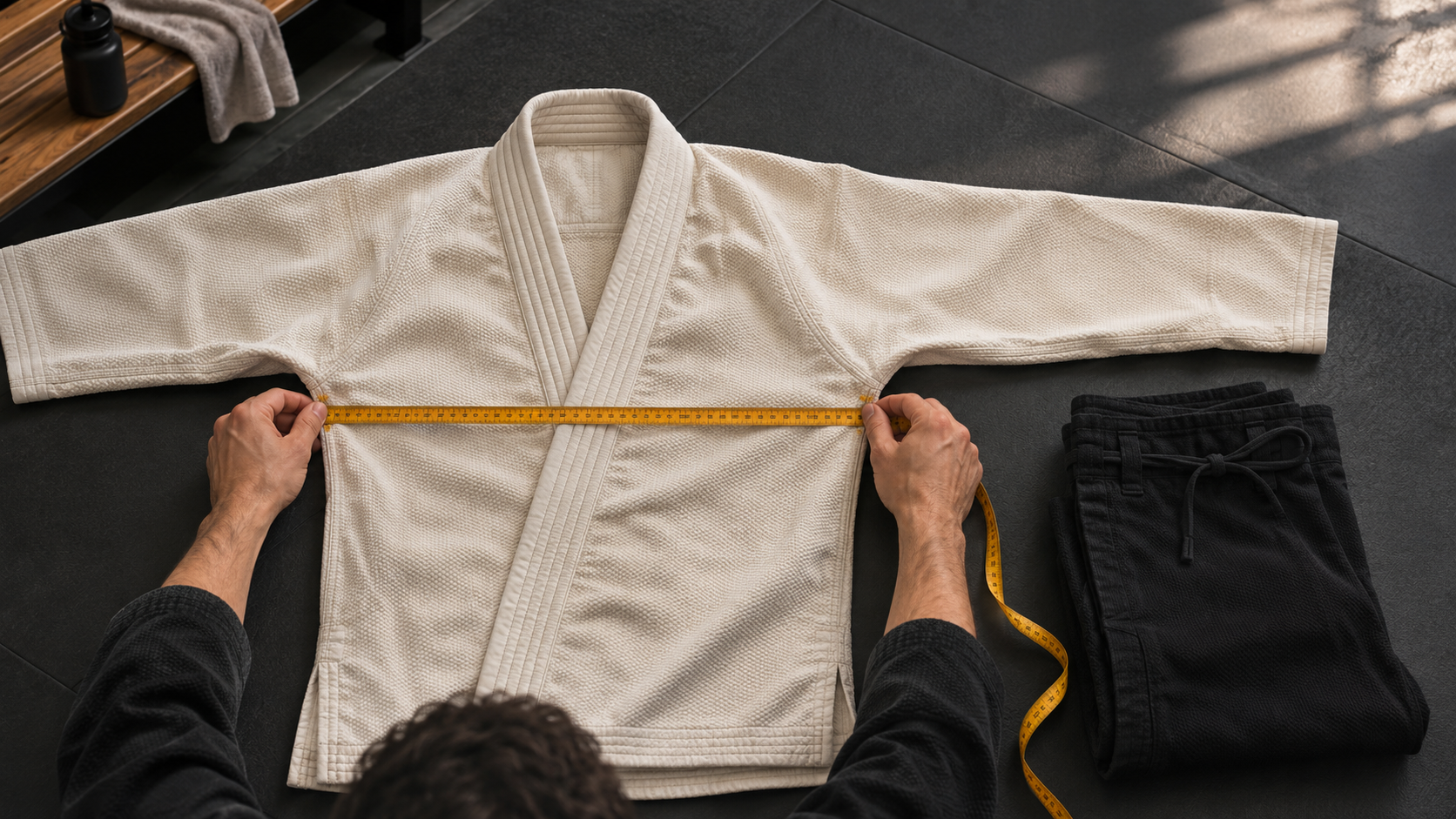
Lay your best-fitting jacket flat, with the sleeves out to the sides and the cloth relaxed. Measure from cuff to cuff, across the chest at the underarms, and down the back from the collar seam to the hem. Write the numbers down and make a note of anything you’d change. If you need slightly more sleeve length but like the chest width, tell the seller both things. A photo with the tape in place helps you check that you measured the same way.
Measure the pants at the waist with the drawstring loose. Then check the inseam and the length from the top of the waistband to the bottom of the leg. Ask whether an elastic waist was measured at rest or stretched. If you often find gi pants tight across the thighs, ask for the width of one leg just below the crotch. That extra number can help where the waist and inseam both look right.
Try the fit before your first wash
Check the return terms before you remove tags or wash the gi. If you can try the uniform on indoors, put on both pieces and tie your belt. Extend your arms, reach across your chest, and bring your elbows together. The jacket should leave enough room across the upper back for those motions. Look at where the cuffs land and whether the lapels still sit comfortably as you move.
For the pants, step into a lunge, squat, and sit on your heels. Pay attention to the seat as well as the knees. A waistband can feel comfortable when you stand but slip when you bend. A pant leg may look long enough in front of a mirror but ride up when you sit. Leave enough room for movement and some change after washing, especially if the gi is already close to your lower limit for sleeve or pant length.
Look beyond jacket fabric weight
GSM means grams per square meter. It tells you the weight of a given area of fabric, which makes it useful for comparing two jackets with a similar weave. The collar, size, trim, and pants all contribute to the weight of a complete set. Two gis with the same GSM can feel different in your hands and on the mat. If total weight matters, ask for the weight of the jacket and pants together in your size.
Pearl weave gives the jacket a raised texture. Canvas tends to have a flatter surface and can feel substantial in the pants. Ripstop has a grid you can see in the fabric. Those descriptions help you understand what you’re buying, but the cut still matters. A lightweight jacket that binds across the back will feel restrictive. A pair of canvas pants with room at the knee and seat may move well even if it feels heavier in your hand.
Know what you’re buying secondhand
Ask for photos of the specific gi, including the labels on both pieces, the cuffs, the collar, and the knees. Ask whether the jacket and pants came from the same release and whether the seller has repaired or altered either piece. If you’re looking for a certain batch, compare the placement of patches, labels, and trim against reference photos. Ask for purchase records if the seller has them, especially if the price reflects the value of a collectible set.
A gi marked barely worn can still have changed shape after washing or drying. Request current flat measurements and compare them with your own. Work out the total price with shipping, and look at the return terms in case the item arrives with a flaw you couldn’t see in photos. If you mainly want a gi for Tuesday and Thursday classes, put fit and condition ahead of how hard a batch is to find.
Plan for competition and care
Read the organizer’s current rules if you plan to compete. Check the color, fit, patch placement, and construction of the exact set you intend to wear. Give yourself time to wash it and check the fit again before the event. For an IBJJF gi weigh-in, athletes weigh in wearing the gi, so check your weight in the full required uniform. If you already own a spare that meets the event rules, consider bringing it.
Follow the care label for your release and take the uniform out of your bag after training. Shoyoroll’s general care guidance calls for cold washing with mild detergent and air drying. Turn the gi inside out if the instructions allow it, and give the collar and waistband enough air to dry fully. When a new uniform is already a good fit, a hot dryer can take away length you wanted to keep.
Make the choice you’ll be happy to wear
When you compare Shoyoroll gis at Strikers BJJ, keep the exact model or batch name and your preferred jacket and pant measurements handy. Pick the option that suits the class you attend most, or the event you’re buying it for. If two sets meet those needs, choose the one you’d rather see waiting for you when you open your gym bag.