
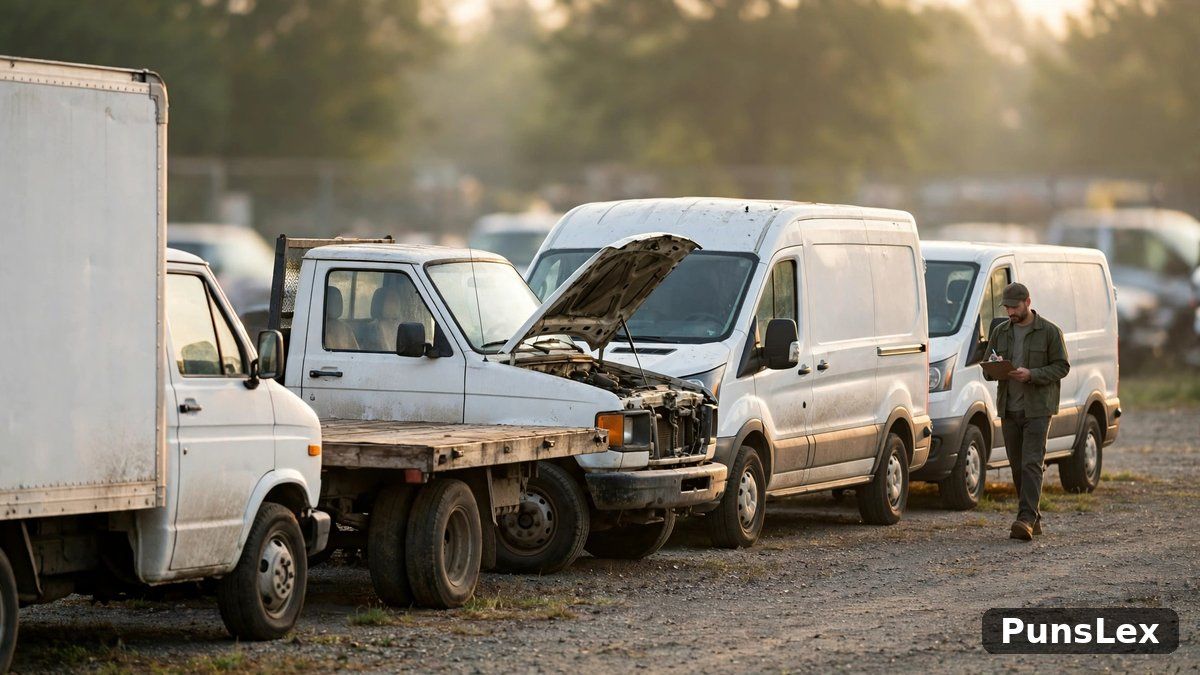
Buying Used Commercial Vehicles: How to Avoid the Mistakes That Cost Fleets Money
For a growing business, buying used commercial vehicles is often the fastest sensible way to add capacity. The truck is available now, the steepest depreciation is behind it, and the monthly payment is easier to carry than a new vehicle’s.
The catch is that a used truck carries its previous life with it. Hard routes, skipped services and deferred repairs never show in a listing photo, but they decide what the vehicle costs you during its first year in your fleet.
What separates a bargain from a liability is process. The buyers who do well work through the same checks every time: true cost, records, inspection, paperwork and fit for the job. This guide walks through each one.
Don’t Let a Low Purchase Price Distract From the Real Cost
The advertised price is only the entry fee. Before a used truck earns anything, it may need tires, brakes, a full service, registration, transport to your yard, and changes to the body or equipment before it matches your work.
That is how the cheaper truck quietly becomes the expensive one. A vehicle priced below similar models but needing immediate work can cost more on day one than a higher-priced truck that goes straight into service, fully sorted.
So price every candidate the same way: purchase price plus inspection, transport, taxes, registration, immediate repairs and upfit changes. Then hold back a maintenance reserve, because even a well-kept truck usually asks for something in its first months with you.
Check Maintenance Records Before Trusting the Odometer
Mileage matters, but it is a partial witness. Two trucks with identical odometer readings can have lived very different lives: one cruising highways at steady speed, the other idling at job sites and grinding through stop-and-go delivery routes.
Wear follows the work, not just the distance. Records are how you find out which life a truck has had, and they are worth more than a clean cab or fresh paint when you are deciding what to pay.
Look for Consistent Service History
Ask for whatever documentation exists: oil and filter changes, brake work, transmission services, coolant changes and major repairs. A consistent pattern, at sensible intervals, suggests an owner who treated maintenance as routine rather than emergency response.
Read the pattern, not just the presence of paperwork. Repeated visits for the same fault — overheating, electrical gremlins, transmission complaints — point to a problem that was managed rather than fixed, and it may soon be yours.
Missing records are not proof of neglect, but they are uncertainty. Uncertainty should change your behaviour: a deeper inspection, a harder negotiation, or a decision to keep looking.
Consider Engine Hours Alongside Mileage
Many commercial trucks record engine hours as well as miles, and the two together tell a fuller story. Engines wear while they run, including the hours spent idling or driving power take-off equipment while the wheels never turn.
This matters most on vocational trucks: wreckers, utility and bucket trucks, mixers, refuse and construction vehicles. Low miles with very high hours is not a contradiction on these trucks; it is a description of their working day.
Neither number decides anything alone. Hours, miles, records and an inspector’s findings together build the picture. When they disagree with each other, that disagreement is itself information worth chasing.
Never Skip an Independent Mechanical Inspection
Photographs, listing descriptions and a smooth test start cannot reveal what a lift, a scanner and an experienced eye can. Developing faults in an engine, gearbox or aftertreatment system are exactly the repairs that turn a bargain into a burden.
Arrange the inspection with a mechanic or inspection service that works for you, not the seller. If a seller resists a reasonable independent inspection, treat that resistance as a finding in itself and be ready to walk away.
Engine, Transmission, and Drivetrain
Start with a cold engine, not one warmed up before you arrive. Cold starts expose smoke, rattles and slow cranking that disappear once everything is hot. Check for leaks, coolant condition, blow-by and any sign of past overheating.
A diagnostic scan can surface stored fault codes, but treat a clean scan with mild suspicion: codes can be cleared. The inspector should also drive the vehicle, feeling for shift quality, driveline vibration, pulling and abnormal noise under load.
On diesel trucks, ask specifically about the emissions aftertreatment system — the diesel particulate filter and related components. Failures there are common on hard-worked used trucks, expensive to put right, and easy to miss on a short visit.
Brakes, Suspension, Tires, and Frame
Get the truck on a lift and look at the frame properly. Surface rust on a working truck is normal; cracked rails, bent crossmembers, flaking structural corrosion and amateur weld repairs are a different category entirely.
Brake condition, steering play, worn suspension bushings and tired shocks all belong on the report. Uneven tire wear is a clue, not just a cost: it can point to alignment problems, bent components or a history of overloading.
Tires themselves are a real budget line on a commercial vehicle, and mismatched or aged-out rubber across an axle tells its own story about how the previous owner spent money. Price replacements into your offer.
Specialized Equipment
On a vocational truck, the equipment mounted on the chassis can cost as much to repair as the driveline. Hydraulic rams, pumps, winches, liftgates, cranes, refrigeration units and dump bodies each need testing through their full working cycle.
Choose an inspector who knows that body type. A general truck mechanic can judge the chassis, but a reefer unit’s temperature pull-down or a wheel-lift’s hydraulics need someone who works on them routinely.
Put It Through a Working Road Test, Not a Trip Around the Block
A five-minute loop on quiet streets proves very little. Ask for a proper road test: highway speed, a hill if one is available, full-lock turns in a yard, and enough time for the engine and gearbox to reach full working temperature.
Use the test to listen and feel, not just to drive. Note vibrations that arrive at one speed and leave at another, brakes that pull, steering that wanders, and how the transmission behaves when it is asked to work.
If the truck will carry or tow real weight in your service, say so before the test. Some sellers will allow a loaded run; even an unloaded one tells you far more than a warm-up lap ever will.
Check the DOT Inspection Status, Not Just the Condition
A truck that has been working legally in interstate service should carry proof of a current periodic inspection. Working through the federal annual inspection standard shows how wide that inspection runs: brakes, steering, suspension, frame, tires and lights, judged at least once every twelve months.
Ask to see the most recent annual inspection report, not just the sticker. A passing report with few recorded defects, produced by a seller who can find it quickly, is a small but real sign of an organised maintenance culture.
A lapsed inspection is not automatically a deal-breaker on a parked or lightly used vehicle, but ask why it lapsed. The answer often reveals how the truck was treated when nobody was checking.
Make Sure the Vehicle Actually Fits Your Business
A sound truck that cannot do your work is still the wrong truck. Before you compare listings, write down the actual job: typical payload, routes, distances, loading method, and any equipment the vehicle has to power or carry.
Understand Weight Ratings and Equipment Capacity
Learn the key numbers and do not let a seller blur them. Gross vehicle weight rating is the maximum the vehicle may weigh in total; payload is what remains for cargo once the truck’s own weight and equipment are counted.
Gross combination weight rating covers truck plus trailer, and towing capacity depends on the whole setup, not engine size alone. A powerful engine in a lightly built chassis does not create capacity the frame and brakes were never given.
Remember that everything you bolt on spends payload: toolboxes, racks, liftgates, refrigeration units and crew. Weigh a candidate as it will actually work, or at least do the arithmetic honestly, before you commit.
Avoid Buying More Truck Than You Need
Oversizing feels safe and bills you for the feeling: higher purchase price, more fuel, more expensive tires and brakes, and sometimes licensing or driver requirements your operation does not need. The surplus capacity earns nothing on light work.
Undersizing is worse. A truck run at or beyond its ratings wears faster, works its brakes and driveline harder, and can put you on the wrong side of weight rules. Neither extreme is a bargain.
Buy for the work you do most weeks, with modest headroom for the work you reasonably expect. A vehicle matched to the regular workload is almost always the cheapest one to own.
Compare Local Inventory Without Limiting Your Options
Buying nearby has real advantages. You can inspect in person, verify documents face to face, avoid long-distance transport costs, and sort out questions before money moves. For common configurations, local may be all you need.
Specialised trucks are thinner on the ground, though. The wrecker, reefer or crane body in the right specification may simply not exist within your county, and waiting for one can cost more than travelling for one.
Judge every candidate against the same criteria, wherever it sits. When you widen the search, add transport, travel and inspection costs to the distant truck’s price, then compare totals honestly rather than falling for the nearer truck by default.
Where to Buy: Dealers, Auctions, Fleet Disposals and Private Sellers
Dealers are the easiest route and usually the dearest. In exchange you may get reconditioning work already done, help with paperwork and financing, and sometimes a short warranty. The premium buys convenience and a business you can go back to.
Auctions can produce genuine bargains, and genuine traps. Inspection windows are short, vehicles are sold as seen, and buyer’s fees add to the hammer price. Auctions reward buyers who can judge a truck quickly and punish hopeful guessing.
Fleet and rental-company disposals are the quiet middle option. Vehicles typically come with documented maintenance and honest wear, often at high miles accumulated on highways. Private sellers, meanwhile, can tell you the truck’s real history — but offer no recourse if the story was edited.
Verify Ownership, Title Status, and Vehicle Identification
Mechanical condition is only half of a safe purchase. Confirm that the seller actually owns the vehicle and can legally sell it, and that the paperwork describes the truck standing in front of you, not another one.
Match the vehicle identification number across the title, the manufacturer’s plate and the door or frame stamp, and investigate any mismatch before paying anything. Run the VIN through the federal safety recall lookup to see whether recall work is still outstanding.
Ask about title brands as a direct question. A salvage or rebuilt title is not always a reason to refuse a truck, but it changes its value, its insurability and sometimes where it may be registered. Surprises here are expensive.
Run a Lien and Title-Brand Check Before Money Moves
A truck can carry debts as well as cargo. Loans, tax claims and unpaid repair bills can attach to a vehicle as liens, and a buyer who skips the check can inherit an argument that has nothing to do with them.
Before the sale, use a commercial vehicle history and lien check to pull the vehicle’s recorded past together in one place before you rely on the seller’s version of it.
At closing, get lien releases or payoff confirmation in writing as part of the transaction, not as a promise for later. Clean paperwork is part of what you are buying; do not pay full price for a vehicle without it.
Don’t Ignore the Cost of Future Repairs and Downtime
The repair bill is rarely the whole cost of a breakdown. A truck out of service can mean missed jobs, a rental replacement, towing charges, idle crew and customers whose patience you spend along with your money.
Before buying, test the support around the vehicle. Are parts for this engine and body readily available? Can a shop near you service the chassis and the mounted equipment? Does this model have known recurring faults you should budget around?
A slightly dearer truck with documented history, common parts and a local workshop that knows it will often out-earn a cheaper orphan. Reliability is not a feature of the truck alone; it is a feature of the truck in your area.
Be Careful With Financing and Warranty Terms
A comfortable monthly payment can hide an expensive loan. Before signing, run your own figures through an equipment loan calculator and compare the total amount payable over the full term, not the instalment alone. Longer terms cut the payment and raise the total.
Match the loan to the truck’s remaining working life. Still owing heavily on a vehicle that is approaching the end of its economic usefulness is a trap; the debt should retire while the truck is still earning.
On warranties, read what is actually covered, for how long, with what deductible, and where approved repairs must happen. Chassis and mounted equipment may sit under different terms. Get promises in writing; a verbal assurance is worth exactly the paper it is not written on.
Know When to Walk Away From a Used Truck
Some trucks should end the conversation. Unexplained VIN discrepancies, inconsistent ownership documents, evidence of serious structural damage, and major faults the seller will not let you evaluate are not negotiating material; they are warnings.
Pressure is a warning too. A seller pushing for immediate commitment, before records can be checked or an inspection arranged, is asking you to buy the risk they are in a hurry to sell.
Walking away does not require a perfect alternative. Ordinary wear, honest cosmetic damage and priced-in maintenance are all fine. What you are refusing is the unknown — and unknowns are where used trucks hide their real prices.
A Simple Checklist Before Finalizing the Purchase
Before signing anything, confirm each of the following:
- The vehicle matches your workload, payload and equipment requirements.
- The VIN agrees across the title, the plates and the stamps, with no unexplained differences.
- Title status and brands are known, and liens have been checked and cleared in writing.
- Maintenance records and the latest annual inspection report have been reviewed.
- An independent inspection, including the mounted equipment, has been completed.
- Significant faults found have been priced into the deal or fixed.
- Transport, taxes, registration and first servicing are inside the budget.
- Financing totals and warranty terms are understood and documented.
- Parts availability and local service support have been confirmed.
Keeping the same checklist for every purchase is what turns experience into process. It lets you compare two trucks on evidence rather than impressions, and explain the decision later with a straight face.
Frequently Asked Questions About Buying Used Commercial Vehicles
How many miles are too many for a used commercial truck?
There is no universal limit. Acceptable mileage depends on the truck’s design, the work it did, its engine hours and how it was maintained. A high-mileage truck with consistent records can be a safer buy than a low-mileage one with none.
Is it better to buy a used commercial vehicle from a dealer or a private seller?
Either can work. Dealers may offer reconditioning, paperwork help, financing or a limited warranty; private sellers can describe the truck’s real working history. Whichever you choose, verify ownership, check the title and liens, and insist on an independent inspection.
How much should a business budget for repairs after buying a used truck?
No fixed percentage fits every truck. The right reserve depends on age, mileage, engine hours, condition and the work it will do. Let the inspection findings and local service quotes set the figure, and review it after the first months of operation.
Can a used commercial truck be financed?
Yes. Commercial lenders, dealers and equipment finance companies all lend against used trucks, with terms shaped by your credit, business finances and the vehicle’s age and condition. Compare the total cost over the term, not just the monthly payment.
Make the Buying Decision Based on Evidence, Not Appearance
A polished cab, fresh paint and a confident listing can make any truck look ready for work. None of them guarantees it will still be earning in a year. Evidence — records, inspections, paperwork and honest arithmetic — is what does.
Buy the truck whose condition you understand, whose costs you have counted, and whose paperwork is clean. Do that consistently, and used commercial vehicles stop being a gamble and become what they should be: the economical backbone of a growing fleet.