
AI Real Estate Underwriting: How Machines Took Over the Clerical Work
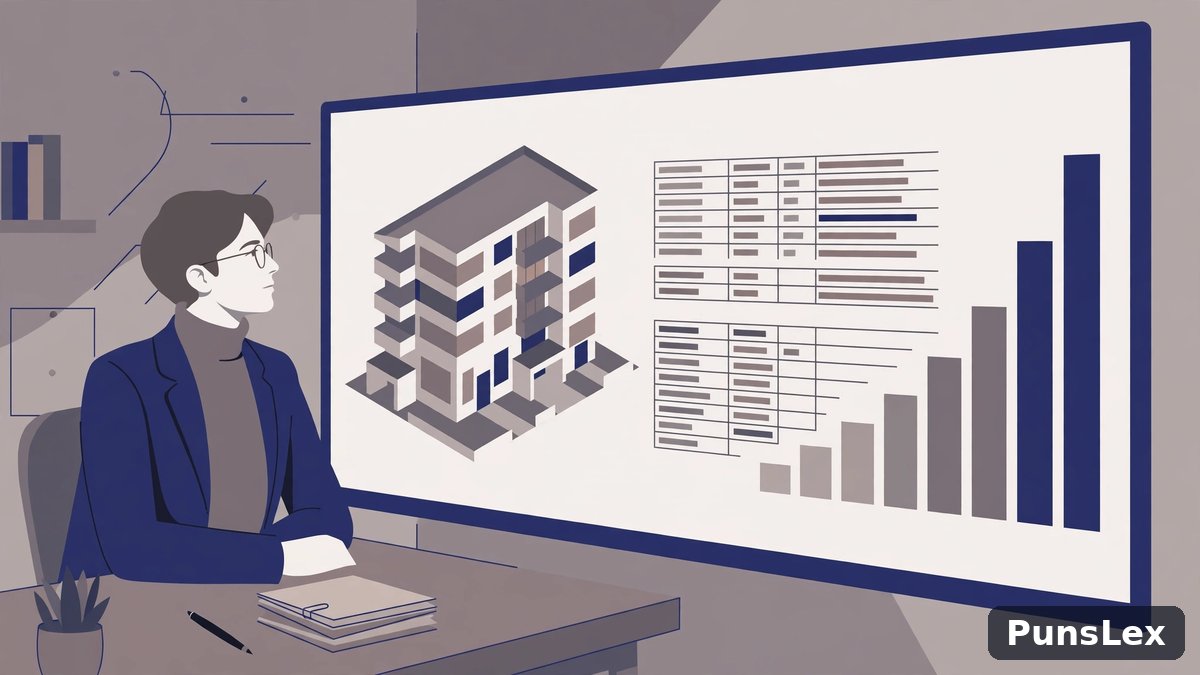
Every multifamily deal still begins the same way: a broker’s package, a stack of PDFs, and an analyst with a spreadsheet. What has changed is how much of that stack ai real estate underwriting can now read, sort and model before a human opens it.
The promise is not a machine that approves loans or buys buildings. It is a machine that assembles the evidence quickly, so the people who do judge deals spend their hours on judgement instead of transcription.
What follows is a look at where the technology genuinely earns its place: the documents it digests, the errors it catches, the scenarios it runs — and the decisions it should never be left to make alone.
The real bottleneck was never the math
A ten-year proforma is not hard mathematics. Any competent analyst can build one, complete with a refinance case and a promote structure, in an afternoon. The slow part was never the formulas.
The slow part is input assembly. An offering memorandum written to flatter, a T-12 exported from one accounting system, a rent roll exported from another — all of it has to become clean, comparable line items first.
That clerical layer is where the hours die, and it is exactly the layer automation removes first. What remains is the part of underwriting that was always the real job: deciding whether the business plan is believable.
What the model actually ingests: rent rolls, T-12s and leases
Feed an underwriting tool a deal and it starts with the same documents a junior analyst would request. The rent roll gives unit-by-unit occupancy, in-place rents, lease start and end dates, concessions and expirations.
The trailing twelve months of operating statements — the T-12 — supplies the income and expense history. Leases, tax bills, insurance quotes and the offering memorandum then fill in the terms hiding behind those numbers.
On top of the deal’s own paper, the model pulls market data: achieved rents at competing properties, vacancy and absorption trends, the county’s tax reassessment rules, and insurance benchmarks for the region.
Diligence errors have a pattern, and it is boring
The mistakes that cost money in underwriting are seldom exotic. They repeat so reliably that they can be written down as checks — and a checklist is precisely what software is good at enforcing.
- Property tax reassessment. Underwriting the seller’s current tax bill, in a jurisdiction that reassesses on transfer, flatters the deal from day one.
- Insurance. Last year’s premium is a poor guide in coastal and storm-exposed markets, where renewal quotes have moved sharply.
- Payroll. Staff shared across a seller’s portfolio can make a single asset look far cheaper to run than it will be standalone.
- CapEx phasing. A per-unit renovation average hides downtime, permit delays and the order the work must actually happen in.
- Stale comps. Rent comparables gathered months ago, in a submarket absorbing new supply, overstate what renovated units will achieve.
Each of these is a knowledge gap rather than a modelling failure, which is why automated checks work against them. A system that benchmarks payroll per unit against similar assets nearby catches the omission early.
Lenders work under the same discipline from the other side. Reading supervisory guidance on commercial real estate lending makes clear that assumption quality, not just leverage, is what gets tested when valuations move.
Comp analysis at machine speed — and where it misleads
Comparable analysis used to mean an afternoon of phone calls and stale printouts. A model can now pull achieved rents, concessions and occupancy for every competing property in a radius, refreshed as new leases sign.
That speed changes the questions a team can ask. Instead of accepting three broker-supplied comps, an analyst can test the whole competitive set, filter by renovation standard, and watch the assumed rent premium move with the filter.
The limit is context. Software cannot smell the construction site two blocks away, learn that a comp’s landlord is quietly offering two months free, or judge that a rival building’s amenities make its rents a poor guide.
Financing scenarios: where speed changes decisions
Capital structure is where iteration speed changes behaviour. A bridge loan with an interest-only period tells a different story from agency fixed-rate debt at lower proceeds, and the equity waterfall redistributes that story again.
When loan terms, proceeds tests and the capital stack are modelled live rather than hard-coded, fifteen saved copies of a workbook collapse into one model the whole team can interrogate together.
Teams stop defending a single base case and start describing a range: coverage if refinancing slips eighteen months, the structure that survives a wider exit cap, the point where the promote actually begins to pay.
Trade-offs worth naming
Automation introduces its own failure modes. Extracted figures can be confidently wrong, and a clean interface makes a wrong number look authoritative at exactly the moment it deserves a second look.
Benchmark-driven expense assumptions smooth over genuine local anomalies. A model assembled in minutes can also be adopted by a team that never internalises how it behaves when the inputs turn hostile.
The discipline that matters is provenance. Every figure should trace back to a source document, and every overridden assumption should carry a note saying who changed it and why. Audit trails make speed defensible later.
Where purpose-built platforms fit
A general-purpose AI assistant can summarise a lease abstract, but it will not produce an institutional underwriting model with a structure a lender’s credit team would recognise as defensible.
That gap explains the purpose-built platforms. They are designed around the deal file itself, ingesting the T-12, the rent roll and the memorandum, and returning a populated model rather than a conversational answer.
The better ones keep the working where analysts can audit it: comps visible, assumptions adjustable, overrides logged. The same numbers then carry forward into committee reporting and post-close management instead of dying in a spreadsheet.
The calls a model should never make alone
Some judgements stay human because they are judgements. Whether a sponsor’s renovation timeline is credible, whether a neighbourhood is genuinely turning, whether a tenant concentration is a risk or a strength — these are arguments, not calculations.
A model can price the scenario in which the anchor tenant leaves. It cannot interview that tenant, read the local planning agenda, or weigh the sponsor’s record across their last three deals.
The healthy division of labour is simple: software assembles, checks and stresses; people decide. Once a team treats a model’s output as the decision itself, the errors stop being clerical and start being expensive.
Fair lending, bias and the compliance line
Underwriting models learn from historical data, and historical lending data carries historical patterns — including patterns that track neighbourhood demographics. A model trained uncritically can reproduce those patterns at scale while looking perfectly neutral.
Regulators have been clear that the law does not soften for algorithms. Fair-lending duties under the Equal Credit Opportunity Act and the Fair Housing Act apply to automated decisions as they do to manual ones, and the CFPB’s guidance on automated decision-making confirms that a lender using a model owes applicants specific, accurate reasons for an adverse decision.
Practically, that means testing model outcomes across protected classes, documenting why each variable is used, and keeping a human able to explain — and override — any decision an applicant or a regulator might challenge.
Closing the loop after close
Most firms underwrite a deal, close it, and then manage it in an entirely separate system with a fresh set of budget lines. The original assumptions are never systematically compared with what actually happened.
So the team never calibrates. It repeats its house biases — renovation premiums habitually optimistic, expense growth habitually low — without ever seeing the pattern written down in front of it.
A practical loop is unglamorous: tag every material assumption at underwriting, review the top ten against actuals at six and eighteen months, and record the variance by market and by asset vintage.
Practical steps for a small team
- Standardise one expense taxonomy across every deal before automating anything. Starting from a standard chart of accounts for rental properties keeps categories consistent, because automation on inconsistent categories only produces fast inconsistency.
- Define your non-negotiable checks — tax reassessment, insurance quote, payroll normalisation, concession analysis — and require evidence for each one.
- Keep a screening model and a full model. Screen from an address and basic assumptions; reserve deep diligence for deals that survive screening.
- Insist on source traceability for every extracted number, and review overrides as a team rather than letting them pass silently.
- Run three financing structures on every deal that reaches committee, not one, and present coverage sensitivities alongside the returns.
None of this requires an enterprise budget. It requires deciding, once, how your firm wants evidence handled — and then letting the software enforce that decision on every deal that follows.
Conclusion
AI real estate underwriting is becoming less about producing a number and more about defending a range. The technology’s real contribution is clerical: cleaner inputs, enforced checks, faster scenarios, fewer silent errors.
The judgement — about sponsors, neighbourhoods and business plans — remains stubbornly human, and the compliance duty remains entirely the firm’s. Used that way, automation finally makes the analyst’s job the one they thought they were signing up for.