
HYB Meaning in Text: What Does HYB Mean in Texting?
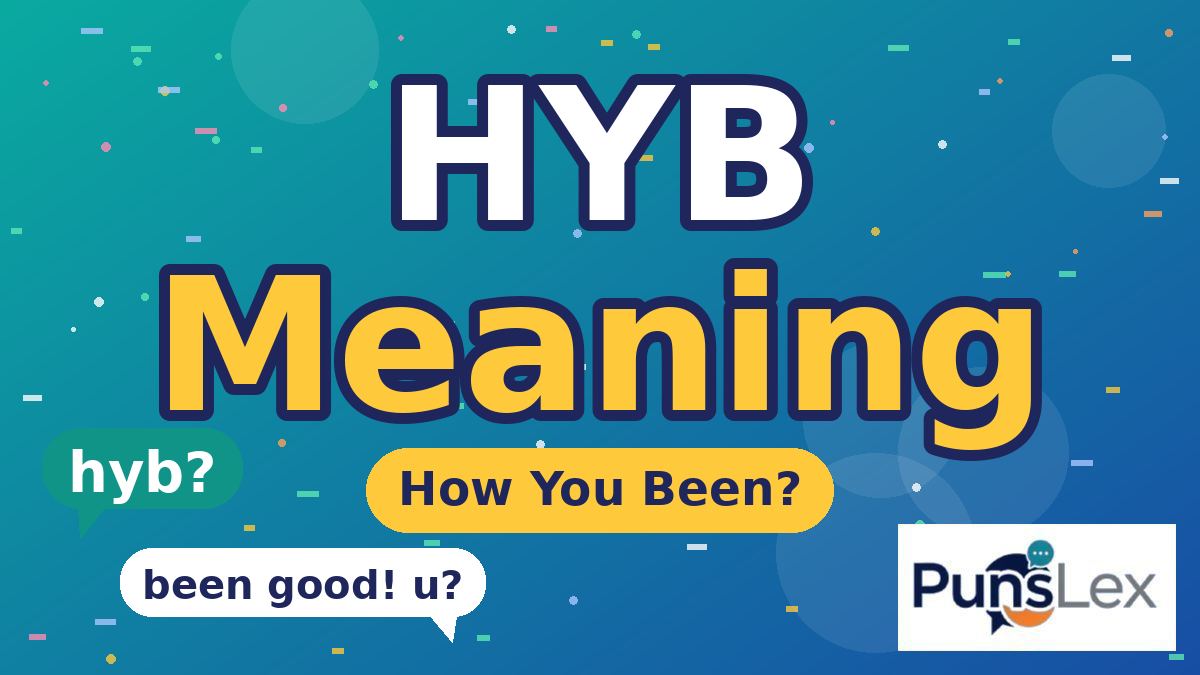
A three-letter message lands in your chat — “hyb?” — and you end up asking the question everyone asks: what does hyb mean in text? HYB stands for “how you been.” It is a quick, friendly check-in, usually from someone you have not talked to in a while.
This guide gives you the plain meaning first, then the useful parts: real chat examples, what HYB signals from different senders, and copy-paste replies for every tone — warm, funny, flirty or honest. By the end, a bare “hyb?” will never stall you again.
One caution before the examples: HYB is strictly casual. It belongs in chats with friends and people your age, not in work email or a first message to a stranger — and the sections below show exactly where that line sits.
⚡ Quick Answer: What Does HYB Mean in Text?
HYB means “how you been.” It is the three-letter version of “How have you been?” — a casual greeting people send when there has been a gap since the last conversation.
It asks about the whole stretch since you last talked, not just today. Read it as friendly until proven otherwise: the sender thought of you, and they want the update.
What Does HYB Stand For? 🔍
HYB is an initialism built from the phrase “how you been” — H for how, Y for you, B for been. The phrase itself is the relaxed, spoken form of “How have you been?”, and the abbreviation keeps that same relaxed feel.
Nobody sends HYB to ask about this morning. They send it to cover the days, weeks or months since you last spoke, which is why it so often arrives with “long time” energy attached.
Origin of HYB 📜
HYB belongs to the great texting squeeze, when messages were typed fast, shortened hard, and sent from phones with no room to waste. Slang dictionaries were already recording “hyb” with the meaning “how you been?” by 2010, and the reading has stayed stable ever since — unusual for internet slang, where most abbreviations drift or die within a few years.
It spread the way most durable slang spreads: through everyday chats first, then into comments, DMs and group chats, until three letters could carry a whole reunion.
Why People Use HYB in Texts 💡
- It fits the gap. “How are you?” asks about today. HYB asks about everything since the last chat, which is exactly the question two busy people owe each other.
- It asks for nothing. There is no favour, no plan and no news attached — just “you crossed my mind.” Low-pressure messages are the ones that actually get answered.
- It is fast on both sides. Three letters to send, and the reply can be just as light — though it deserves better than one word, as the reply bank below shows.
- It restarts dead chats. A conversation that ended weeks ago cannot be revived with “hi.” HYB carries its own reason for messaging, so it never feels random.
Common Examples of HYB in Conversations 💬
Every example below is an everyday pattern — the names change, the shapes stay the same.
The resurface. Maya: “hyb? it’s been forever” — Jordan: “I knowww. Been good, just working a lot. You still in Austin?”
The sibling check-in. “hyb” — “alive. barely. exams are eating me alive this week”
The group-chat revival. “hyb y’all 👀 we still doing saturday or did that plan die”
The new-person opener. “hey hyb” — “hi! been good, just started a new job actually. wbu?”
The post-news hello. “hyb! saw the announcement, congrats!!” — “thank youu, still feels unreal tbh”
The dry exchange. “hyb” — “good u” (Technically complete. Emotionally, a closed door — the reply section fixes this.)
Table of Usage Examples 📊
| Scenario | Message | What It Really Means |
|---|---|---|
| Old friend, months of silence | “hyb? long time” | I miss talking to you — catch me up |
| Sibling, random Tuesday | “hyb” | Just checking you are alive |
| Sleeping group chat | “hyb y’all 👀” | Wake up, let us plan something |
| Someone new you are chatting with | “hey hyb” | I want this conversation to keep going |
| Right after your big post | “hyb! saw the news” | Congratulations — now tell me everything |

💬 What HYB Means From Different Senders
The letters never change, but the sender does — and the sender is where the meaning lives.
From a Close Friend
Maintenance, pure and simple. Close friends send HYB the way neighbours wave: no occasion needed. It means “we are good, and I am keeping us good.” Answer with a real detail or two and throw the question back, and the friendship stays warm at almost no cost.
From a Crush or Someone You Are Talking To
Here HYB is a door held open. It rarely arrives with a plan attached, because the plan is the conversation itself. A short, playful reply — plus a question — keeps the door open. A flat “good” closes it politely, which is also a valid answer if that is what you intend.
From Someone You Have Not Heard From in Months
This is HYB in its natural habitat. The gap is the whole point: the sender knows it has been ages, and the three letters are a low-stakes way to test whether the friendship is still switched on. It almost always deserves a warm answer, even a short one.
In a Group Chat
A group HYB is a flare, not a question. Nobody expects six life updates; the sender wants signs of life and, usually, a plan. Reply with energy and a suggestion — “alive! also, beach saturday?” — and you have done the job the message was sent to do.
HYB vs Other Similar Acronyms 🤔
- HBU — “how about you?” HYB’s natural echo. HYB opens; HBU bounces the same question back after you have answered. Half of all HYB conversations end with an HBU.
- WYD — “what you doing?” Asks about right now, this minute. WYD wants your present; HYB wants your recent past.
- WYA — “where you at?” Asks about place, not wellbeing — and sometimes means “where have you been?” in spirit. If the location version confuses you too, our guide to what WYA means untangles it.
- WSG — “what’s good?” A greeting with more swagger and less genuine curiosity. WSG rarely wants a real answer; HYB usually does.
When to Use HYB ✨
- Reconnecting with a friend after days, weeks or months of silence.
- Opening a casual chat when you have no specific news — HYB is its own excuse.
- Checking in on a sibling, cousin or old classmate you genuinely miss.
- Reviving a group chat that has gone quiet.
- Following up after someone’s post, story or announcement gave you a reason to say hello.
When NOT to Use HYB ❌
- In work email, or to a manager, client or teacher — spell the question out in full.
- As the very first message to a stranger. HYB presumes a history; without one, it reads oddly familiar.
- In anything official: applications, announcements, complaints, condolences.
- With relatives or older contacts who do not use texting slang — the kindness gets lost in the decoding.
- When the news is serious. “HYB” under a hospital update is the wrong weight entirely.
Tips for Responding to HYB 😎
- Match the energy, then add one degree. A slightly warmer answer than the message you received keeps the chat climbing instead of flatlining.
- Give one real detail. “Good” is a wall; “good — finally finished my exams” is a door. Details are what conversations are made of.
- Bounce it back. End with “you?” or “hbu?” so the sender gets a turn. A check-in answered without a return question quietly ends.
- Answer the gap, not the day. They asked about the stretch since you last talked, so mention the biggest thing in it — a move, a job, a trip, a nothing-much.
- Do not overthink the clock. HYB has no expiry timer. A reply three hours later with actual warmth beats an instant “good” every time.
📝 25+ Replies to HYB for Every Tone
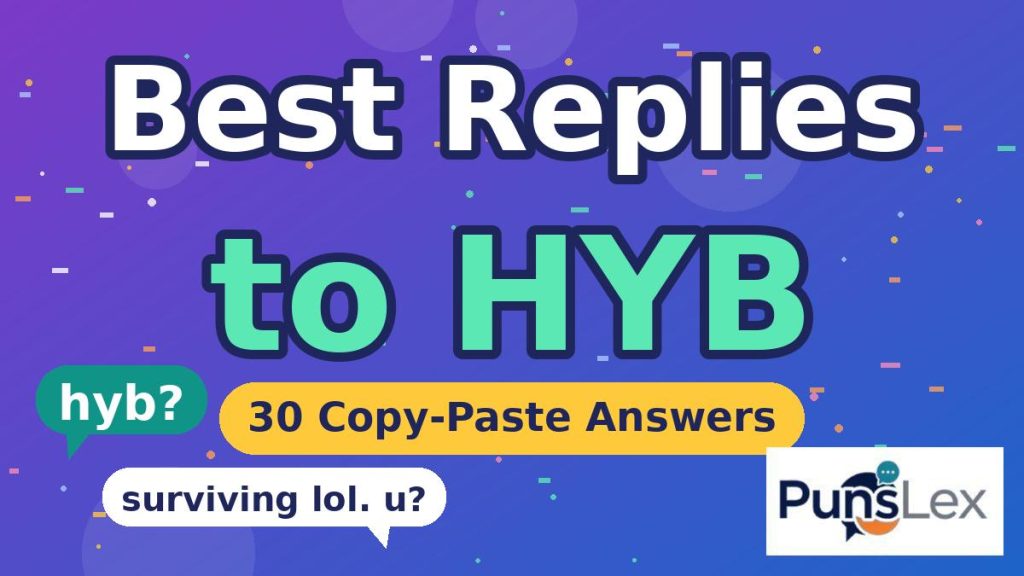
Thirty copy-paste answers, sorted by the energy you want to send. Every one either adds a detail or returns the question — most do both.
Warm and Friendly
- “Been good! Busy, but the good kind. How about you?”
- “Heyy, I’ve been well! Missed our chats — what’s new with you?”
- “All good here. Life’s calm right now and I’m not complaining. You?”
- “Better now that you messaged 😄 Been working and sleeping, mostly. Hbu?”
- “I’ve been great, thanks for checking in! What have you been up to?”
Short and Sweet
- “Good, you?”
- “Been alright! Hbu?”
- “Same old, same old 😅 you?”
- “Living the dream lol. You?”
- “Can’t complain! What’s up?”
Funny
- “Surviving on caffeine and vibes. You?”
- “Bold of you to assume I’ve been doing anything but napping”
- “Been better, been worse, been hungry mostly”
- “Oh you know, professionally overthinking everything. You?”
- “Still here, still weird. Your turn”
Flirty
- “Better now 😉 what took you so long?”
- “Was doing fine, then you texted. Now I’m great”
- “Miss me or something? 👀”
- “I’ve been good… could be better if someone took me out for coffee”
Honest: When Life Is Not Great
- “Honestly? It’s been a rough few weeks. Getting there though. You?”
- “Not amazing, not gonna lie. Appreciate you asking though ❤️”
- “Been a lot lately. Can I vent for a sec, or is now bad?”
- “Meh. But talking helps, so hi”
Busy but Kind
- “Hey! Swamped today but good. Can we catch up properly this weekend?”
- “Been running around nonstop — rain check on a real chat tonight?”
- “Good, just buried in work rn. Miss you though!”
Keep the Conversation Going
- “Good! Actually — guess what happened this week…”
- “Been well! Wait, I never asked how YOUR new job went?”
- “All good. Okay your turn: give me your life update in three emojis”
- “Pretty good! What made you think of me today?”
HYB in Social Media Context 📲
HYB does its best work in private corners of social apps: Snapchat and Instagram DMs, TikTok message threads, and replies to stories, where “hyb?” under a photo is a soft way to restart a conversation with a reason attached. It also turns up in comments under reunion posts and throwback photos.
On Snapchat especially, HYB sits in a family of casual openers — if a chat there starts with WYLL instead, that is a different question entirely, and worth decoding before you answer. Public captions are the one place HYB rarely appears: it starts conversations rather than decorating posts.
Psychology Behind Using Acronyms Like HYB 🧠
HYB works because of what it does not ask. There is no favour, no plan and no decision inside it — the only request is “tell me you are okay,” which is why it slips past the defences that make people leave heavier messages on read.
It also carries a small, powerful signal: out of everyone the sender could message, they spent the thought on you. And because the question covers a whole stretch of time, it quietly gives the friendship a fresh page — whatever the last conversation was, this one starts at “so, how have you been?”
Fun Variations of HYB 🎉
- hyb — lowercase, the default. Maximum casual, zero ceremony.
- hyb? — with the question mark, the most common form; the mark does the asking.
- HYB! — capitals and an exclamation point, usually riding on good news or a reunion.
- hyb👀 — with the eyes emoji, a nudge: the sender has seen your story and wants the story behind it.
- hybbb — stretched letters, pure affection; the texting equivalent of saying a name in a sing-song voice.
HYB in Different Cultures 🌏
HYB itself belongs to English-language texting, and you will meet it wherever English is texted — the US, UK, Canada, Australia and far beyond, carried by the same apps everywhere.
The habit behind it is universal, though: every texting culture squeezes its greetings down. French texters squash “salut” into “slt,” and Spanish speakers tap out “q tal” for “qué tal.” Different letters, same instinct — the friendly check-in is always the first thing a language learns to say faster.
🔤 Other Meanings of HYB You Might Run Into
In texting, “how you been” wins by a mile — but slang dictionaries record a few other readings of the same three letters, and context is how you tell them apart:
- “Hit you back” — as in “can’t talk rn, I’ll hyb later.” If HYB appears where a goodbye belongs, this is the reading.
- “Handle your business” — a motivational jab between friends: “stop scrolling and HYB.” Verb-shaped, usually aimed at a task.
- “Hell yeah brother” — an exclamation of hype, mostly in gaming and sports chats, sent as a cheer rather than a question.
If the message arrives as a greeting after a silence, it is “how you been.” If it arrives mid-hype or mid-goodbye, check the other two first.
Other Related Acronyms to Know 📚
- HBU — how about you? The return serve in every check-in rally.
- TTYL — talk to you later. The polite full stop when a chat has to end.
- HMU — hit me up. An invitation: message me, let’s arrange something.
- IKR — I know, right? Agreement with feeling, for when the update lands.
- NP — no problem. The classic two-letter closer after a thank-you — our guide to what NP means in text covers its tones, from friendly to dry.
Quick Recap Table ✅
| Term | Meaning | Best Used |
|---|---|---|
| HYB | How you been | Reconnecting after a gap |
| HBU | How about you | Bouncing the question back |
| WYD | What you doing | Asking about right now |
| WYA | Where you at | Finding someone, casual check-ins |
🚫 Common Mistakes When You See or Send HYB
- Reading a bare “hyb” as rude. It is not cold; it is casual. Brevity is simply the dialect of texting, and the sender chose to spend it on you.
- Sending it upward. Bosses, teachers and clients get the full sentence. HYB’s charm depends entirely on the relationship being level.
- Answering with one word. “Good.” ends the very conversation the sender started. One detail and a “you?” costs four seconds and saves a friendship’s momentum.
- Assuming every HYB is flirty. Most are friendly maintenance. Read the sender and the history before reading anything into the letters.
- Treating it as an emergency reply. HYB opens slow conversations; anything urgent deserves a real message, not a check-in.
FAQs
1. Is HYB formal or informal?
Firmly informal. HYB is texting slang, built for friends, family and people your own age. In anything formal — a work email, a message to a teacher, a first note to a client — write “How have you been?” in full instead.
2. Can HYB be used in professional messages?
Only in the loosest workplaces, and only with colleagues you already chat with casually. With managers, clients or anyone you are still impressing, three unexplained letters read as lazy. Spell the question out; it costs you two seconds.
3. How should I respond to HYB?
Match the sender’s energy and add one real detail: “Good — the new job’s keeping me busy. You?” Short is fine; one word alone is a dead end. The reply bank above holds thirty options sorted by tone, from warm to honest.
4. What are alternatives to HYB?
The closest swaps are “how’s it going,” “how have you been” and “what’s up.” In acronym form, HBU asks the same thing back, while WYD and WYA open a different kind of check-in. Choose by how long the silence has been.
5. Is HYB popular on social media?
Yes — it lives in DMs, comments and story replies on apps like Snapchat, Instagram and TikTok, anywhere a fast, friendly opener fits. It is rarely a caption word; HYB starts private conversations rather than decorating public posts.
Conclusion
HYB means “how you been” — a three-letter check-in that says someone thought of you and wants the real update. Answer it in the same spirit: honest, warm, and with a question back, and the smallest message in your chat can restart a whole friendship.
Keep HYB for the people and places it fits — friends, family chats and casual DMs — and spell the greeting out everywhere else. And if you ever want the long form done properly, the dictionary’s entry for how are you shows the classic check-in it shortens.





7 Comments