Key Terms Used in Psychic Chat Services
Online psychic chat services have developed their own set of terms, abbreviations, and phrases to help readings flow smoothly. Understanding this unique vocabulary can make your sessions clearer and the overall experience more comfortable.
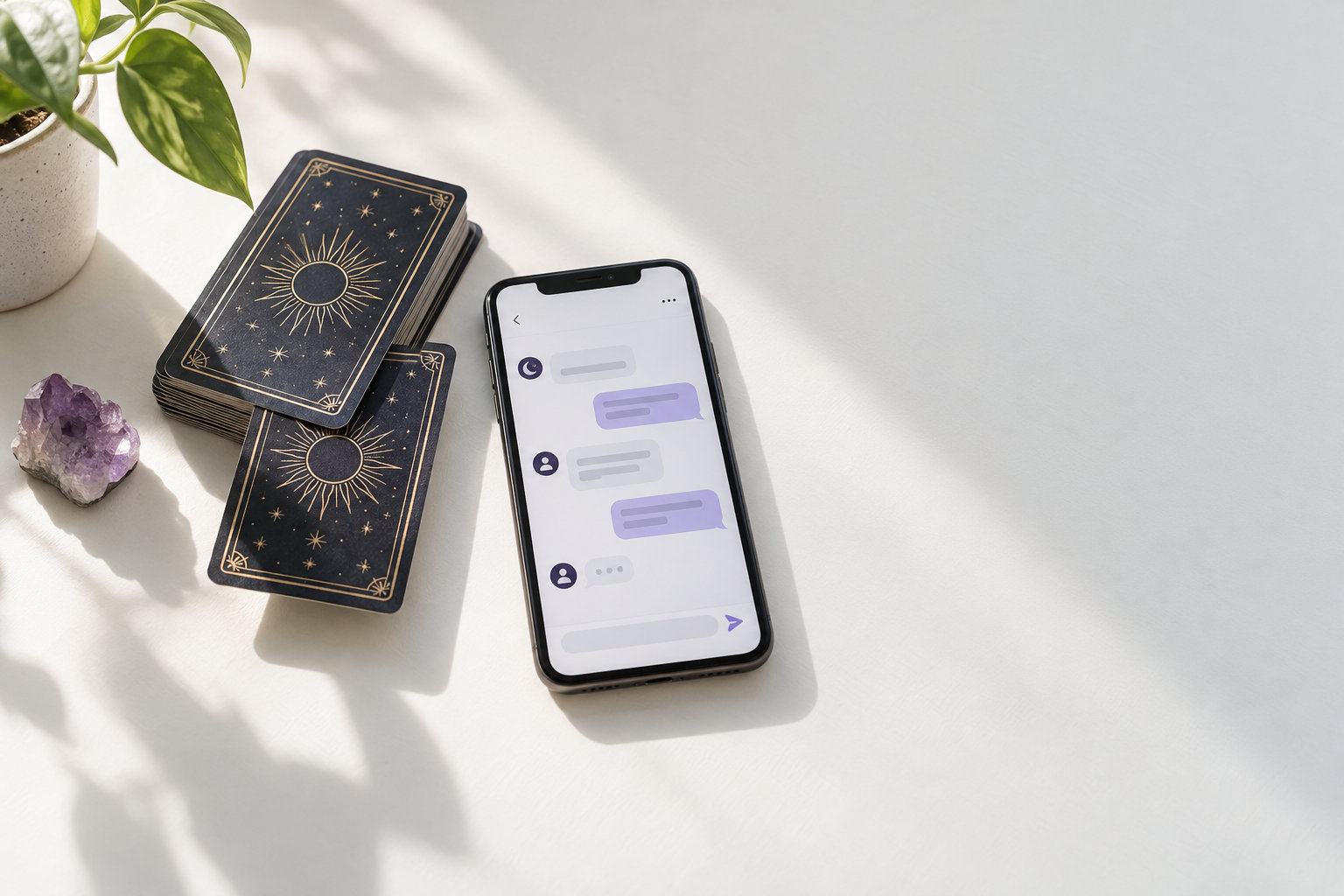
Psychic chat services refer to online platforms where you can interact with readers in real time by exchanging text messages. These chats often use specialised language to keep conversations efficient and to set expectations around readings. Many of the terms you will encounter are shaped by tradition, by the background of the reader, or by the style encouraged by the service, and not every word means the same thing everywhere. Familiarity with these common terms can help you navigate your next chat session with more confidence, whether you are using Psychic Today or a similar service.
The unique flow of chat-based readings
Text-based sessions differ from phone or email readings in several ways. In chat, responses are instant and written, making every word count. Readers often use concise phrasing and select terminology to save time and clarify their process. This is different from the more conversational style you might find on a voice call. This shorthand helps keep both parties focused and the guidance coherent, especially when handling many queries in a limited timeframe.
Key session and process terms
A “reading” in chat generally means any session where a psychic offers insights, often centred on specific questions. When tarot is used, you might see words like “pull” or “draw,” which refer to selecting cards for your reading. The term “spread” describes the arrangement of cards, usually chosen for its ability to shed light on particular types of questions or issues.
The person receiving the reading is commonly called the “querent” or sometimes the “sitter.” During chat sessions, readers may ask for more “context,” meaning any details that help focus the reading and target your concerns accurately. This request is typical in real-time chat to ensure the advice provided is as relevant as possible.
Common tarot chat vocabulary
Tarot-focused sessions use specialised language. Decks divide into “Major Arcana,” which are 22 cards representing core themes or significant moments, and “Minor Arcana,” which cover daily events and details. When a card is turned over, it may be “upright” (facing the usual way) or “reversed” (upside down), with interpretations that vary accordingly.
Some spreads include a “significator,” a card chosen to represent you or your main question. Occasionally, a reader will draw a “clarifier” or “clarifying card” if more detail is needed about a previous card. “Card positions” in spreads often stand for timeframes or roles, such as “past,” “present,” “future,” “advice,” or “outcome.” These help the reader structure their interpretation efficiently during chat.
Astrology and timing phrases
Astrological terms appear frequently. Your “sun sign” is determined by your date of birth and reflects core personality traits. The “moon sign” relates to emotions, while “rising” (or “ascendant”) gives insight into first impressions or outward identity. Discussions about “transits” refer to the movement of planets and their influence at a given time. “Retrograde” describes when a planet appears to move backwards and is often said to affect clarity or progress.
“Timing” and “timeframe” are used to discuss when events might unfold, though many chat readers clarify that precise dates are rare and subject to change. These words are meant to set expectations rather than promise exact outcomes.
Describing psychic abilities and reading styles
Terms describing a reader’s style or skills come up often. “Clairvoyant” means perceiving information visually, sometimes referred to as “seeing.” “Clairsentient” refers to “feeling” sensations or emotions, while “clairaudient” is “hearing” messages or sounds beyond normal perception. The label “intuitive” covers a broad spectrum, describing those who use instincts, impressions, or subtle cues rather than formal psychic tools.
Some sessions offer “mediumship,” where the reader may relay messages from those who have passed on. This is different from a general “psychic” reading, which draws on broader sources of insight. Distinguishing between these can help align your expectations with the session’s focus.
Frequently referenced energy and spiritual concepts
In chat readings, “energy” often refers to mood, feelings, or the general atmosphere surrounding you or your question, used in a casual, non-scientific sense. You might also see mention of “aura” (the energy field around a person) and “chakra” (centres within the body believed in some traditions to be sources of spiritual power). “Spirit guides” are said to be non-physical helpers or mentors who support or guide a reading’s insights.
“Grounding” describes techniques for maintaining calm and focus, either for the reader or for you as the client. In chat, a reader might suggest grounding when strong emotions are present or if the reading covers challenging topics.
Relationship and life-topic abbreviations
You will encounter shorthand around relationship questions, a common theme in psychic chat. Abbreviations like “SP” (special person, usually a romantic interest) or “TF” (twin flame, referring to a perceived intense spiritual connection) are widespread. Phrases such as “no contact” mean there has been a break in communication, while “reconciliation” describes questions about getting back in touch after a split. These terms reflect the topics most often asked about rather than any rule or guarantee about relationships themselves.
Points to consider when interpreting chat terminology
Words and phrases can mean different things depending on the reader’s tradition, platform conventions, or personal style. If you come across language that is unclear, it is reasonable to ask your reader for a plain-language explanation. Many professionals appreciate the opportunity to clarify so the session can proceed smoothly.
Understanding the difference between descriptive chat vocabulary and promises of outcomes is important. Much of the language is interpretive, not predictive, and is intended to support your personal exploration rather than deliver certainties.
Chat readings come with their own set of terms, shaped by years of online interaction and different psychics’ practices. Treat these words as helpful tools for clearer conversation, and do not hesitate to seek clarification when you need it. A shared understanding of psychic chat vocabulary sets the stage for more effective, respectful, and informative exchanges in this unique digital environment.