Contemporary Lighting Trends That Bring Style and Functionality to Modern Homes
Lighting plays an important role in defining the appearance, comfort, and functionality of a modern home. Beyond simply illuminating rooms, the right lighting can highlight architectural features, create a welcoming atmosphere, and make everyday activities more convenient. With changing interior design preferences, homeowners are increasingly looking for lighting solutions that combine visual appeal with practical functionality.
Modern lighting is no longer limited to traditional ceiling fixtures or table lamps. From smart lighting controls and minimalist fixtures to layered illumination and energy-efficient LED technology, there are several ways to enhance residential spaces.
Thoughtful residential lighting design helps bring these elements together, ensuring that every room receives the right balance of brightness, warmth, and style. Here are some contemporary lighting trends worth considering when planning a modern home.
1. Layered Lighting for a Balanced Interior
One of the most popular trends in modern interiors is layered lighting. Instead of depending on a single light source, this approach combines ambient, task, and accent lighting to create a more balanced environment.
Ambient lighting provides general illumination throughout a room. Task lighting supports specific activities such as reading, cooking, or working, while accent lighting highlights artwork, decorative objects, and architectural details.
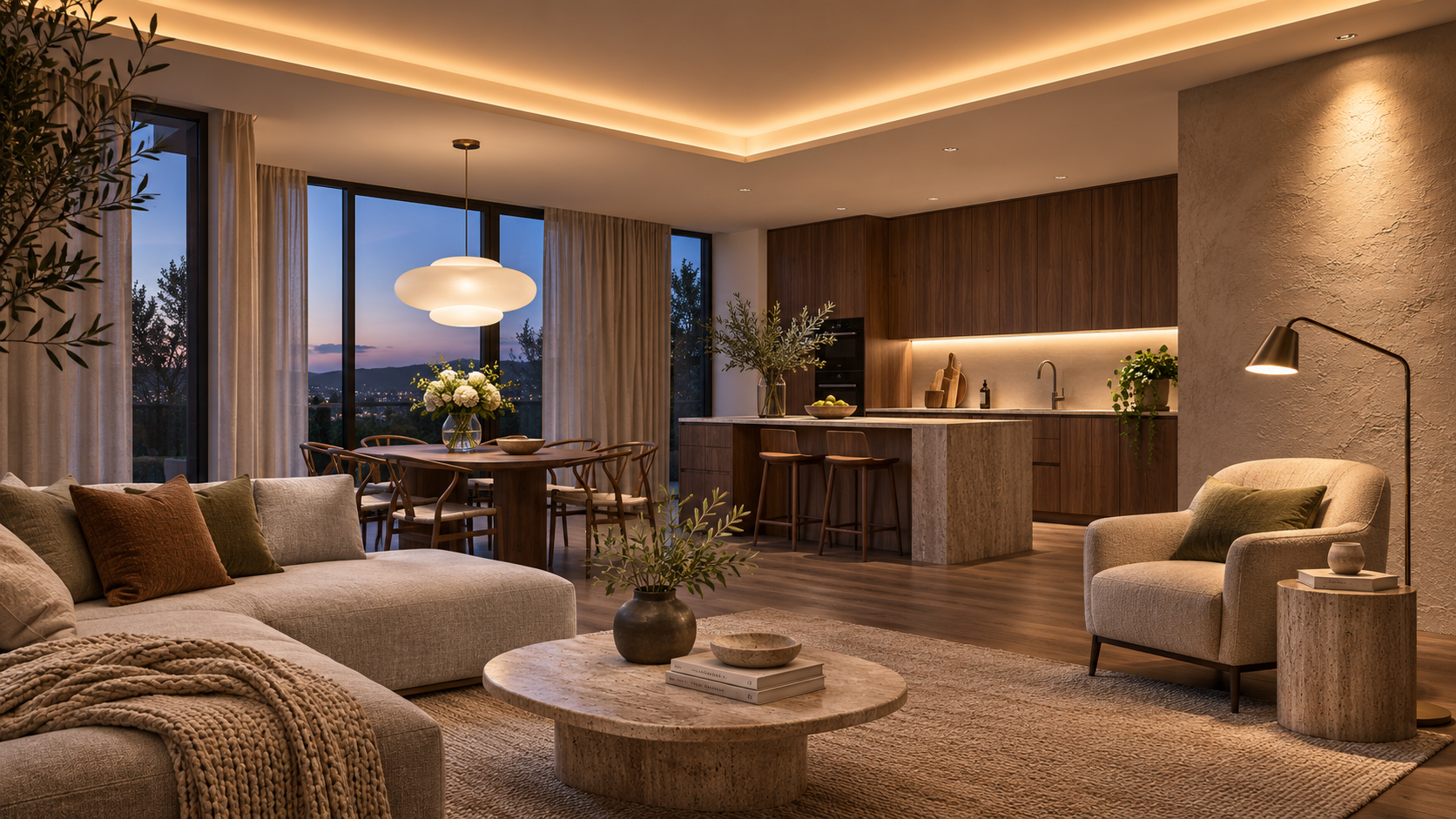
For example, a living room can feature recessed ceiling lights for general illumination, floor lamps near seating areas, and accent lights to highlight wall textures.
A well-planned residential lighting design uses these different lighting layers to improve both functionality and visual depth.
2. Smart Lighting for Greater Convenience
Smart home technology has changed how homeowners manage indoor lighting. Smart lighting systems allow users to control brightness, switch lights on or off, and customize lighting schedules through smartphones, tablets, or voice commands.
These systems can also create preset scenes for different activities. You might prefer brighter lighting while working, softer illumination during dinner, and dimmed lights when watching a movie.
Another advantage is the ability to automate lighting based on schedules or other connected smart home functions.
Integrating smart technology into residential lighting design provides greater control while making everyday routines simpler and more convenient.
3. Minimalist Lighting Fixtures
Modern interiors often focus on clean lines, simple shapes, and uncluttered spaces. Minimalist lighting fixtures complement this approach by providing effective illumination without overwhelming the overall design.
Slim pendant lights, recessed fixtures, discreet track lighting, and simple wall-mounted lights are popular choices for contemporary homes.
These fixtures work particularly well in open-plan living spaces, modern kitchens, and bedrooms where homeowners want lighting to blend naturally with the interior.
Choosing fixtures with suitable finishes and proportions can help maintain a consistent design throughout the home.
4. Statement Lighting as a Design Feature
While minimalist lighting remains popular, statement fixtures are also becoming an important part of contemporary interiors.
Decorative chandeliers, sculptural pendant lights, and artistic ceiling fixtures can act as focal points in dining rooms, entryways, and living areas.
The key is to select a fixture that complements the room’s scale and existing décor. An oversized pendant may look impressive in a spacious dining area but could overwhelm a smaller room.
When incorporated thoughtfully, statement lighting adds personality while maintaining the practical purpose of illuminating the space.
5. Energy-Efficient LED Lighting
Energy efficiency continues to influence residential lighting choices. LED lighting has become a preferred option because it offers efficient illumination, a long operating life, and flexibility in terms of color temperature and brightness.
Homeowners can choose warm white lighting for relaxing areas, neutral white for everyday living spaces, and cooler lighting for work-oriented environments.
LED strip lights are also useful for highlighting false ceilings, kitchen cabinets, staircases, and decorative wall features.
Including energy-efficient solutions in residential lighting design can help reduce electricity consumption while maintaining attractive and comfortable interiors.
6. Indirect Lighting for a Softer Atmosphere
Indirect lighting is an effective way to create a calm and sophisticated atmosphere. Rather than directing light straight into the room, this approach uses concealed fixtures to reflect illumination off ceilings, walls, or other surfaces.
Cove lighting, concealed LED strips, and recessed architectural lighting are common examples.
This technique is especially useful in bedrooms, living rooms, and entertainment areas where harsh lighting may feel uncomfortable.
Indirect illumination can also highlight ceiling designs and architectural details without making the fixtures themselves the main attraction.
7. Lighting That Complements Natural Daylight
Natural light is an important consideration in modern home interiors. A good lighting plan should complement daylight rather than compete with it.
Large windows, glass doors, and thoughtfully positioned openings can help bring natural light into living spaces. During the evening, artificial lighting should maintain a similar sense of comfort and visual balance.
Motorized blinds and smart lighting controls can further improve the experience by adjusting artificial illumination according to changing daylight conditions.
This combination makes residential lighting design more adaptable throughout the day while helping create comfortable indoor environments.
8. Customized Lighting for Different Rooms
Every room serves a different purpose, so using identical lighting throughout the home may not deliver the best results.
For example, kitchens benefit from focused task lighting over countertops and work areas. Bedrooms often need softer illumination, while bathrooms require suitable lighting around mirrors and functional areas.
Living rooms may benefit from a combination of ceiling lights, floor lamps, and accent fixtures to support different activities.
A customized approach ensures that lighting choices reflect how each space is used while maintaining a consistent overall interior style.
Create a Modern Home with Thoughtful Lighting
Contemporary lighting is about finding the right balance between design, comfort, and functionality. From layered illumination and smart controls to energy-efficient LEDs and statement fixtures, modern solutions offer plenty of opportunities to improve residential interiors.
A carefully planned residential lighting design can transform ordinary spaces into welcoming environments while making everyday activities more comfortable.
Sound Effects offers lighting solutions designed to complement modern homes through thoughtful integration and advanced lighting technology. Whether you are updating an existing interior or planning a new home, choosing the right lighting approach can make a noticeable difference.
Visit Sound Effects to explore lighting solutions and discover ways to bring style, comfort, and functionality into your home.