Treet or Treat: The Spelling Verdict and the Names Hiding in ‘Treet’
Somewhere between the keyboard and the Halloween door, a small spelling doubt pops up: treet or treat — which one is real? The pair sound identical, yet only one of them belongs in your sentence.
The answer takes one line: write treat, every time — treet appears in no standard dictionary, and none will ever back it. The full side-by-side is set out in this guide to treet or treat; the short version fills the rest of this page.
Because treet turns out to have a secret life. It sits on a meat tin in America, on razor blades in Pakistan, and inside old family records — a spelling mistake with a paper trail, which is exactly why it keeps fooling careful writers.
⚡ Quick Answer: Treet or Treat?
The word is treat. It covers the kindness, the snack and the Halloween doorstep cry. Treet earns a dictionary entry nowhere; it survives only inside proper names, where companies and families may spell themselves however they please.
| Word | Status | Where each one belongs |
|---|---|---|
| Treat | The genuine English word | Prose, posters and porch signs |
| Treet | A misspelling wearing brand names | Tins, razor packs, genealogy |
Everything below unpacks that one line: what treat means in its two jobs, where treet genuinely lives, why the mix-up is so common, and the small history of the Halloween cry that made the word famous.
What “Treat” Means as a Noun
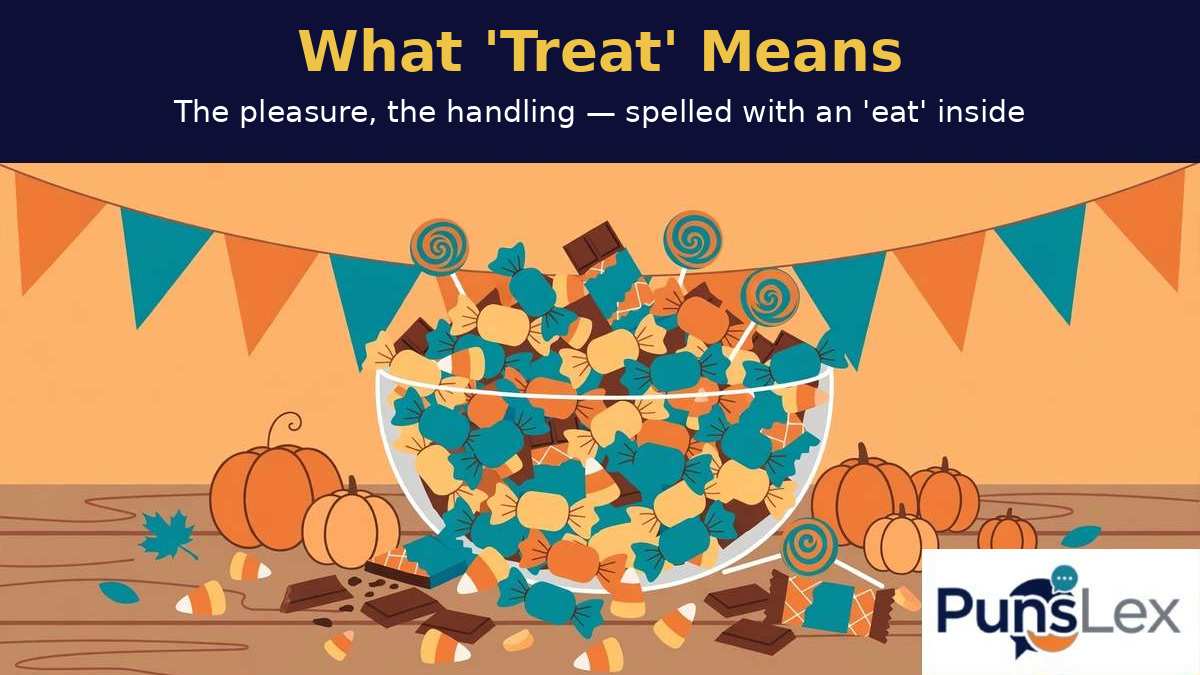
The noun names a small pleasure that breaks the routine: the slice of cake saved for Friday, a film once exams end, the biscuit nobody counted. It can be food, an outing or an experience — what matters is that it feels like a gift.
The word also names the act of providing that pleasure. A round of drinks can be someone’s treat, and a day out can be laid on as a treat for the whole family. The pleasure and the providing share one word.
A treat can even be a promise kept small. “My treat,” said at the café counter, means the pleasure is paid for by the speaker — generosity compressed into two words, no wrapping required.
What “Treat” Means as a Verb
The verb wears gloves: it is the handling word. Doctors treat patients — hence treatment — and hosts treat guests, which is why a generous host treats the whole table alike.
It also covers attitude. To treat something seriously is to handle it with weight; to treat a warning lightly is to shrug it off. And in the phrase treat yourself, the verb and the noun hold hands — you handle yourself to a small pleasure.
The verb takes objects of every size. You can treat a splinter, a crowd, a subject in an essay, or a rumour with contempt — the word scales from surgery to sarcasm without ever changing its spelling.
So What Is “Treet,” Then?
Look treet up in any standard dictionary and you will find — nothing. No noun, no verb and no adjective wears that spelling. As ordinary English, treet does not exist; every essay or caption that reaches for it simply means treat. Names are another country: treet can produce receipts there.
Armour launched Treet in America in 1939 — a spiced canned luncheon meat, chicken and pork pressed into a loaf, sold as a shelf-stable staple through the war years and beyond.
Half a world away, Pakistan’s Treet Corporation has been selling razor blades as Treet since 1952, growing from blades into a Lahore-based group. And genealogy keeps the spelling alive: surname guides file Treet as an old variant of Treat.
A Village That Nearly Joins In
Maps come close without quite joining. Treeton, a village in South Yorkshire — Tretone in the Domesday Book — carries the sound with a tail of extra letters, a reminder that place names keep spellings no dictionary would allow.
Treet or Treat in British and American English
Geography offers no refuge here. Some spelling pairs split cleanly across the Atlantic, with one winner per shore, but this pair refuses: London and Los Angeles both write treat, and both mark treet as wrong.
That makes the pair unusually friendly to learn. Whatever variety you write in, and whichever one your reader speaks, the verdict travels unchanged — treat at home, at school and at work, everywhere English is written.
Why People Write “Treet”
The snare is acoustic. You say treat with one long ee sound, and English keeps teaching that double-e spells exactly that ee sound — street, greet, meet, sweet. Fingers follow the ear, and the ear votes for treet.
Brand bleed does the rest. A writer who has seen TREET printed on a tin or a razor pack has met the spelling in the wild, looking official. The brain files it as a word it knows, and out it comes at typing speed.
Speed finishes the job. Messages and midnight homework are typed at talking pace, and treet looks neat enough to slip past a tired eye — sometimes past the spellchecker too, when a name hides inside its dictionary.
When “Treet” Is Actually Right
There is one place treet is not merely forgiven but required: inside the names that own it. Writing about the razor company and respelling it Treat would be its own error — names keep their letters, however odd they look.
The same courtesy covers the meat tin, the family tree and any label printed by its owner. Rule of thumb: if it is printed on the packet, copy the packet; everywhere else, write treat.
Trick or Treat: A Short History
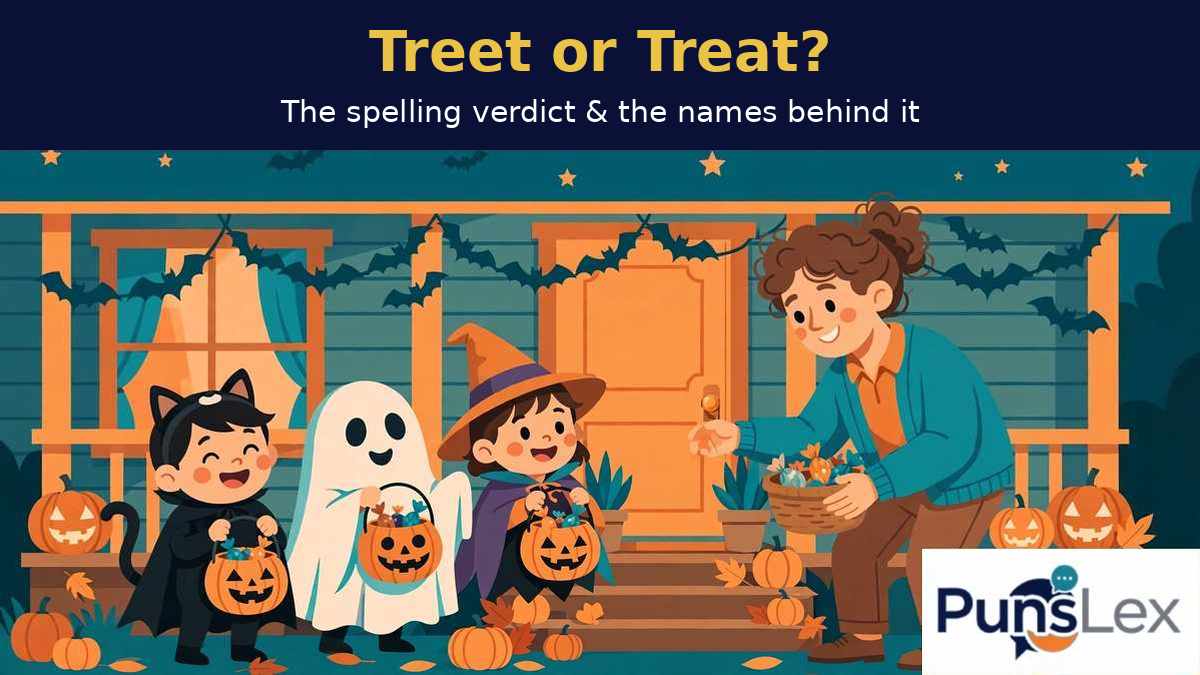
Once a year, the word takes over the street. Trick or treat is the doorstep bargain children offer on Halloween: hand over something sweet, or risk a playful prank. The trick is mostly theatre these days; the treat is very real.
The wording is younger than the ritual. Print first catches it in Ontario, Canada, in 1917 — early reports there even ran a plural cousin, tricks or treats. The door-to-door custom behind the words is far older.
Long before that, Scottish and Irish children were guising — knocking in disguise and earning food — a custom traced to the 1500s. England’s version was souling: soul-cakes begged door to door at Allhallowtide, on record since the 1400s.
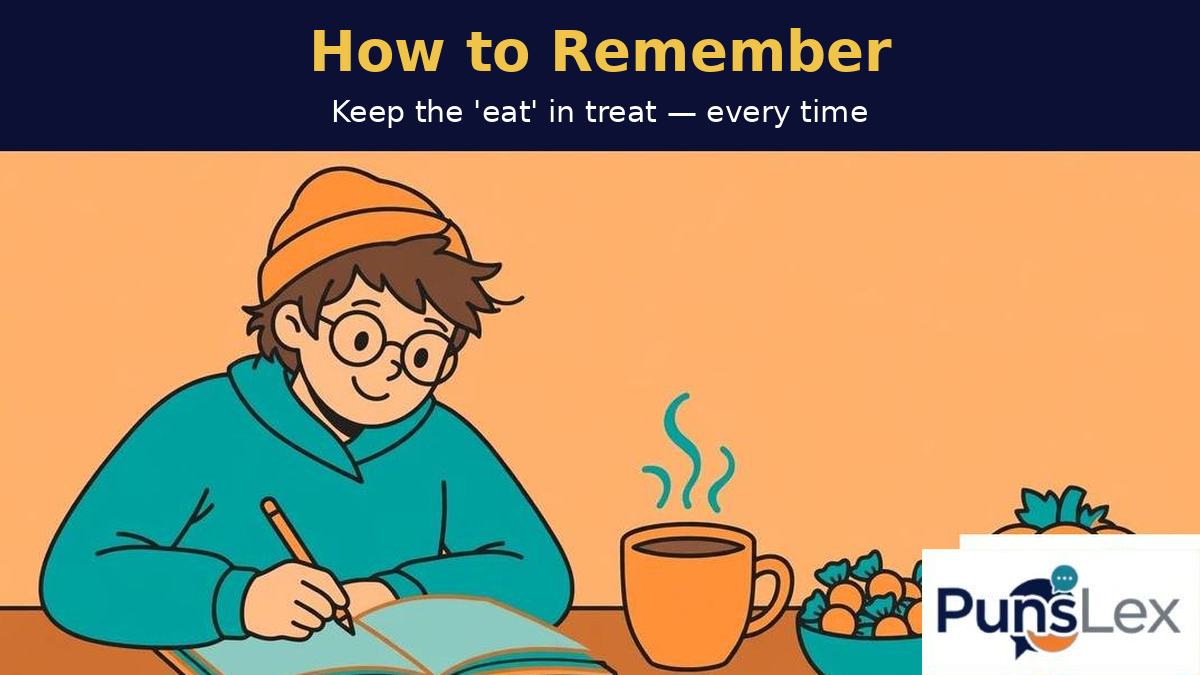
How to Remember: Keep the “Eat” in Treat
One hook settles it for good: treat smuggles a meal inside itself. Read the middle of the word and you find eat, letter for letter — t-r-EAT. Treet hides no such snack; there is nothing inside it to bite.
Whole shelves of spelling guides exist for pairs like this. Gimme Meaning keeps exactly that shelf, untangling the sound-alike spellings English deals out after dark — this one simply shows up in a Halloween costume.
Treat in Real Sentences
The noun at work: “Grandad kept a tin of biscuits that counted as a treat, never as lunch.” Or the modern reflex after a long week: “The exam is over — treat yourself to the long way home.” Both mean a pleasure outside the routine.
The verb at work: “The clinic treats every patient in order of arrival, famous or not.” And the attitude sense: “She treated the rumour as a joke and answered it with cake.” Handling, care and cake — one spelling throughout.
And the doorstep sense: “The sign on the gate read TRICK OR TREAT in letters a metre high.” Nobody has ever carved the treet version for a porch — signs, like dictionaries, vote for treat every single October.
Frequently Asked Questions
Which is correct: treet or treat?
Treat — the only spelling your sentences will ever need. Treet is the misspelling, and separately a name found on tins, razor packs and old family records.
Does treet count as a real word?
Not as ordinary English: no standard dictionary enters it as a noun, verb or adjective. As a proper name it is perfectly real, from Armour’s 1939 luncheon meat to Pakistan’s blade-making Treet Corporation.
Why does treet keep appearing?
Because ears outrun fingers. Treat’s long ee matches the double-e of street and sweet, and familiar brand names lend treet a borrowed authority. At typing speed, the wrong twin escapes.
What is the trick-or-treat bargain?
Give the callers a treat, usually sweets, or gamble on a playful trick — that is the Halloween bargain in four words. Print first recorded the phrase in Ontario, Canada, in 1917.
What are treat’s roots?
Treat descends from Latin tractare, “to handle,” reaching English through Old French traitier. The handling sense still runs the verb — doctors treating patients, hosts treating guests — while the pleasure sense grew from being handled generously.
Can Treet be a family name?
In the records, yes. Genealogy guides file Treet as a historical variant of the surname Treat, so it turns up in old documents and family trees — even while the dictionary stays silent.
Can I write treet as a joke?
In a caption or a card, with readers who get the joke, a deliberate treet can raise a smile. In an essay, an application or a shop sign, the same spelling simply reads as an error.
Conclusion
The contest was never close. Treat wins every job — the snack, the kindness, the clinic and the cry at the door — while treet is a typo that moonlights as a name on tins and razors.
Keep the eat inside your treat and the spelling will never wander again. Then enjoy the word the way it asks to be enjoyed: generously, and preferably with cake. The dictionary has cast its vote; the doorstep agrees every October.