
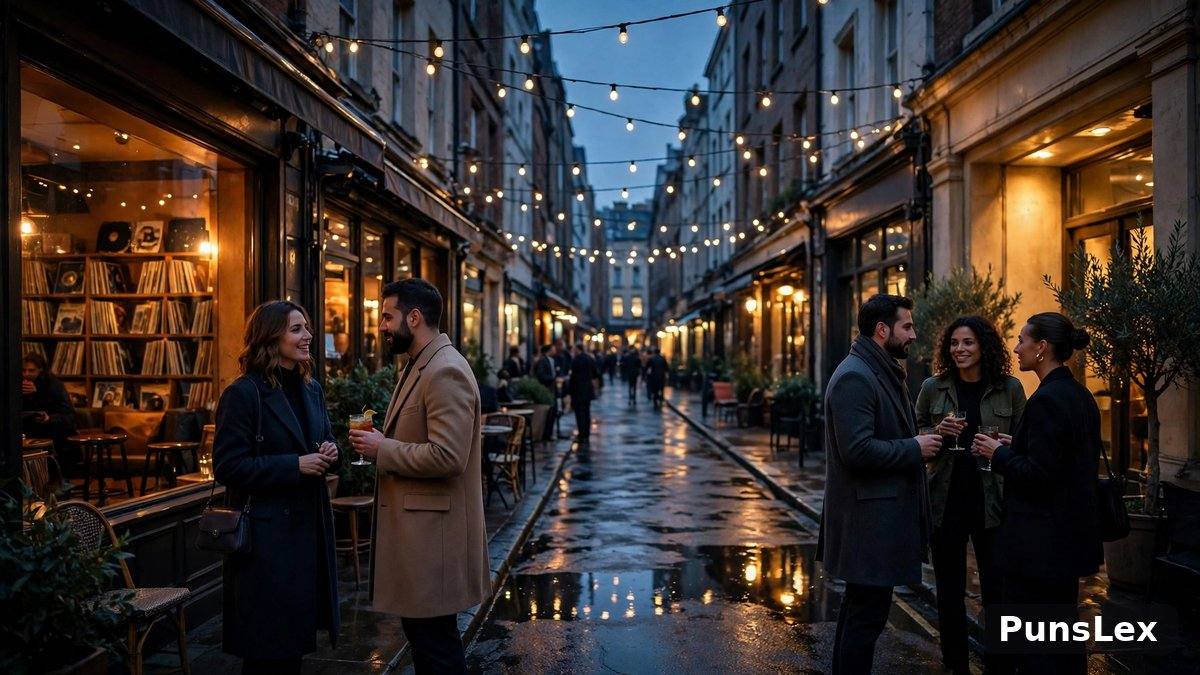
Urban Nightlife Trends 2026: What’s Shaping the Night
The big night out is being quietly redesigned. Look at the urban nightlife trends 2026 is bringing into focus and a pattern emerges: nights start earlier, rooms get smaller, and what is in your glass matters less than it once did.
None of this happened by accident. Rent, wages and licensing costs have squeezed the old model of the cavernous club, while a generation raised on streaming and group chats plans its social life with more intention — and more screenshots — than any before it.
What follows is not the death of nightlife. It is nightlife growing up: more curated, more varied, and increasingly designed around how people actually want to spend an evening, rather than how venues once assumed they would.
The Evolution of Urban Nightlife
For decades the formula barely changed: dinner, a bar, then a loud room where the music did the talking. The night was a single product, sold at scale, and the biggest venues usually won.
That model has fragmented. A single evening now gets assembled like a playlist — a gallery late opening here, a listening bar there, a rooftop screening to finish. Venues increasingly specialise instead of trying to be everything at once.
The shift rewards operators who understand a niche deeply. A room that does one thing beautifully, for a defined crowd, can build the loyalty that cavernous generalists now struggle to buy.
The Growing Popularity of Seoul’s Nightlife
Seoul remains one of the clearest windows into where city nights are heading. Its districts run on different clocks: Hongdae leans young and musical, Itaewon international, Gangnam polished and premium, each with its own loyal crowd.
What Seoul does well is density and convenience. Late-opening cafés, karaoke rooms, restaurants and bars stack into the same few streets, so an evening can change direction several times without a single taxi ride.
Other cities study Seoul less for any single venue than for the ecosystem: safe-feeling streets, frequent late transit and a culture that treats the night as a normal extension of the day, not an exception.
The Rise of Low- and No-Alcohol Nights
The most radical drink on many 2026 menus contains no alcohol at all. Sober-curious socialising has moved from a January experiment into a year-round habit, and venues have stopped treating non-drinkers as an afterthought.
Serious bars now build alcohol-free lists with the same care as their cocktail menus, and the growing range of alcohol-free drinks means abstaining no longer means nursing a soda in the corner.
Some venues go further, programming fully alcohol-free nights: dance floors, tasting menus and DJ sets where the social ritual survives intact and only the ethanol is missing. For many younger guests, that is precisely the point.
Personalization Is Becoming More Important
Regulars increasingly expect a venue to remember them — their table, their taste, the music they stayed for last time. Booking platforms and membership schemes quietly turn those memories into data that shapes the next visit.
Personalisation also means choice of intensity. The same guest might want a high-energy room on Friday and a hushed booth on Sunday, and the venues winning loyalty are the ones that let people move between modes.
Technology Is Transforming Entertainment Businesses
Discovery now happens on a phone long before anyone reaches a door. Short video, review platforms and map listings decide which rooms fill, and a venue that cannot be found in thirty seconds effectively does not exist.
Behind the scenes, operators are studying how venues use booking data to shape the night — spotting which nights sag, which events overperform, and where staffing needs to flex before the queue forms.
Cashless payment, digital ticketing and timed entry have also changed the door itself. The queue is shorter, the guest list is a QR code, and the friction that once defined a night out keeps quietly disappearing.
Earlier Evenings: When the Night Starts at Six
Ask venue owners where growth is, and many point to hours that used to be dead. Early-evening DJ sets, after-work listening sessions and daytime parties that end by ten are pulling crowds the midnight slot no longer guarantees.
The logic is partly economic and partly human. Guests with morning jobs, long commutes or children can still have a full night out — they just want it finished in time to sleep properly afterwards.
Daylight formats blur categories, too. Coffee shops host evening socials, restaurants run listening sessions between services, and rooftops sell the sunset slot as prime time rather than a warm-up.
The Importance of Atmosphere and Interior Design
In a market of near-identical drinks lists, atmosphere is the differentiator guests can feel. Lighting temperature, seat spacing, sound levels and even scent are now designed as deliberately as the menu.
The most successful rooms tend to pick a lane: candlelit and conversational, or neon and theatrical. The struggling ones sit in between, too loud to talk in and too tame to dance in.
Design also has to photograph well without looking staged. Guests share what they find beautiful, and one distinctive corner — a mural, a staircase, a window view — can market a venue for years.
Listening Bars and the Return of the Slow Night
Some of the most sought-after seats in nightlife now come with a request to talk quietly. Listening bars, modelled on Japan’s long-standing jazz kissaten culture, build the night around high-fidelity sound systems and full albums played end to end.
The appeal is focus. In a feed-driven world, a room that asks you to do one thing — listen — feels almost luxurious, and vinyl’s ritual of sides and pauses gives the evening a natural rhythm.
Expect the format to keep travelling. Variations have appeared across North America and Europe in recent years, often small, often booked out, and almost always more about the record collection than the drinks list.
Changing Customer Expectations
Transparency has become a baseline expectation. Guests want prices before they arrive, door policies in plain language, and no surprises on the bill — venues that publish clearly earn trust before the first order.
Service expectations have risen with everything else. Attentive without hovering, knowledgeable without lecturing: the modern guest reads staff quality as the truest signal of how a venue is actually run.
Ticketed Micro-Events and Smaller Rooms
Smaller is becoming a strategy rather than a compromise. Rooms capped at a few dozen guests, sold as ticketed micro-events, trade raw volume for atmosphere, predictability and a crowd that chose to be there.
For promoters, advance tickets change the maths of a night. Revenue is partly known before doors open, no-shows drop, and a sold-out small room generates the waiting-list energy that big venues chase with discounts.
For guests, the trade is intimacy. A chef’s-counter supper club, a thirty-person comedy night or a members’ listening session feels personal in a way a thousand-capacity floor rarely can.
The Influence of International Tourism
Travellers increasingly plan trips around nights as much as sights. A city’s after-dark reputation — its food streets, music rooms and markets — now shapes where visitors book and how long they stay.
Venues have adapted with multilingual menus, clearer online information and booking flows that work for someone planning from another continent. The reward is a midweek crowd that locals alone rarely provide.
The influence runs both ways. Returning travellers bring formats home with them, which is how a Seoul-style karaoke room or a Tokyo-style listening bar ends up opening in London, Toronto or Sydney.
Safety and Responsible Entertainment
A night out is only as good as the journey home. London’s Night Tube, running through Friday and Saturday nights on five lines, shows how seriously some cities now treat late-night transport options in major cities as part of nightlife itself, not an afterthought.
Governance has professionalised too. Amsterdam elected the world’s first night mayor in 2003, London appointed a Night Czar in 2016, and New York runs an Office of Nightlife — officials whose whole job is mediating between venues, residents and city hall.
Inside venues, the responsible end of the market keeps raising its standards: trained door teams, clear house policies, free water, well-lit exits and staff who treat welfare as part of hospitality rather than an interruption to it.
Future Trends in Urban Nightlife
The direction of travel is clear even where the details are not. Nights will keep getting more segmented: more formats, smaller rooms, earlier starts, and menus built for every level of drinking, including none.
Technology will deepen quietly rather than loudly — better booking, smarter pricing, richer sound — while the venues that thrive will be the ones using it to protect the human parts of the night, not replace them.
Cities, for their part, increasingly see the night as infrastructure. Expect more night-time strategies, more late transit and more officials tasked with making sure the after-dark economy works for residents as well as revellers.
Conclusion
Urban nightlife in 2026 is not shrinking; it is specialising. The generic big night out has given way to a mosaic of smaller, earlier, more deliberate experiences, each built around a clearer idea of what a good evening actually is.
For guests, that means more nights worth having. For venues, it means the winners will be the ones that pick their crowd, design honestly for it, and sweat the details — from the first booking click to the last train home.