
LYK Meaning in Text: What Does LYK Mean in Texting?
A plan hangs in the group chat, half-made, and the reply that keeps it alive is three letters long: “lyk”. If you paused over the lyk meaning in text before answering, that pause is the lesson: three letters turned “I don’t know yet” into a promise.
This guide settles the reading first, then shows the moving parts: real chat examples, the senders who post it about their own news, and copy-paste replies for every tone — patient, funny, unbothered or firm.
One caution before the examples: LYK is only ever as good as the follow-through behind it. Kept, it is the most considerate three letters in the chat; dropped, it is a door left open on somebody’s whole evening.
⚡ Quick Answer: What Does LYK Mean in Text?
LYK means “let you know.” It is the three-letter promise typed when the answer is not ready yet — the plan is unconfirmed, the news has not landed, the train has not arrived. The sender is not dodging the question; they are booking you the next message.
What Does LYK Stand For? 🤔
LYK is an initialism built from the phrase itself: L for let, Y for you, K for know. Those three letters do one job — they reach forward and reserve a message that has not been sent yet, a reply the chat is owed.
Most of the time, it does one of three jobs:
- The plan promise — typed while a detail is still open: “don’t book yet, lyk tonight if friday works”
- The news IOU — sent while the sender waits on word themselves: “no reply from the garage yet — lyk the second there is”
- The arrival update — promised by someone mid-journey: “on the train, lyk when I’m two stops away”
One everyday shape:
- Person A: “are we still doing the 7pm showing?”
- Person B: “lyk after work — waiting on one email and then I know”
Key Points About LYK
- Type: A three-letter textspeak initialism, typed lowercase as often as uppercase
- Usage: Casual chats, typed when an answer is owed but not ready — a promise to send the next message
- Emotion: Considerate by default, vague when no timeframe rides with it, a brush-off when the follow-through never comes
- Audience: Friends, group chats and followers — rarely strangers, carefully at work
Origin of LYK 📜
No single inventor or coinage date is on record for LYK, and any exact year would be a guess. The full phrase did the work in speech first: “I’ll let you know” was already the thing you said when an answer existed but had not reached you yet.
Slang dictionaries carry the shortened form from the chat era. Urban Dictionary’s LYK page defines it in one line — “an abbreviation for let you know” — and its top example is the letters doing their everyday job: asked about gaming tonight, the whole reply runs “idk i’ll lyk”.
How Text Abbreviations Became Popular
- Character limits on early texting made every saved letter worth money, so short forms spread fast
- Messenger apps carried the habit from desktops to phones, and group chats taught it to everyone else
- Social captions, comments and DMs did the rest, putting the same clipped promises in front of millions
Common Contexts Where LYK Shows Up 💬
LYK turns up wherever an answer is owed but not ready — or nearly ready. Three settings cover nearly every sighting:
| Context | What the LYK Is Doing | Example |
|---|---|---|
| A plan detail is still open | Promises the missing piece instead of stalling the chat | “don’t book yet — lyk tonight if friday works” |
| News has not landed yet | Turns waiting into an IOU with a sender attached | “no word from the garage. lyk the second there is” |
| Someone is mid-journey | Schedules the arrival update before it is needed | “on the bus — lyk when I’m two stops away” |
Context decides whether the letters are a kindness or a stall. At the kind end, the promise is pure logistics — the same chat that settles a pickup time will trade dinosaur jokes by the dozen an hour later. LYK is the hinge between the two: the plan holds because somebody promised the next message.
How to Use LYK in Texting ✅
LYK lands well when it promises a message and names its trigger. Four habits keep it trustworthy:
- Attach a when or a what. “lyk tonight” and “lyk when the email lands” are promises with handles; a bare “lyk” leaves the chat holding an open tab.
- Aim it at answers you actually owe. LYK works for plans, news and arrivals you genuinely control the update on — not as a fog machine for questions you could answer now.
- Let an emoji set the temperature. “lyk 👀” says the news is coming and might be fun; a bare “lyk.” can read like the subject is closed. Pick the temperature you actually mean.
- Keep it, visibly. The follow-up message is the whole point — when it lands, send it before you are asked. A kept LYK builds credit; a dropped one spends it.
LYK holds a conversation open — it promises the thread a future message. The letters that reopen a thread after it has gone quiet are a different pair entirely: what HYB means covers the check-in that restarts threads like these.
LYK in Social Media Posts 📸
In public, LYK lives in captions, comments and stories — posted ahead of news the poster owes an audience, or promised inside a planning thread:
- “train delayed AGAIN. lyk when I’m actually moving 😭”
- “exam results at 6 — will lyk, whatever happens 👀”
- “restock friday — lyk the link before it sells out this time”
Stories are where the standing promise shines, because the poster grades their own wait before the comments can. And once a planning thread recovers from its wobble and actually agrees the plan, a bare ight is often the three-letter seal on it.
| Platform | Example Message | Setting |
|---|---|---|
| “landed! lyk when I’m at the gate” | Family airport pickup | |
| “results at 8 — will lyk 👀” | Story promise to followers | |
| Discord | “patch notes drop soon, lyk in #announcements” | Server update pledge |
| TikTok | “part 2 tomorrow — lyk first” | Creator sequel IOU |
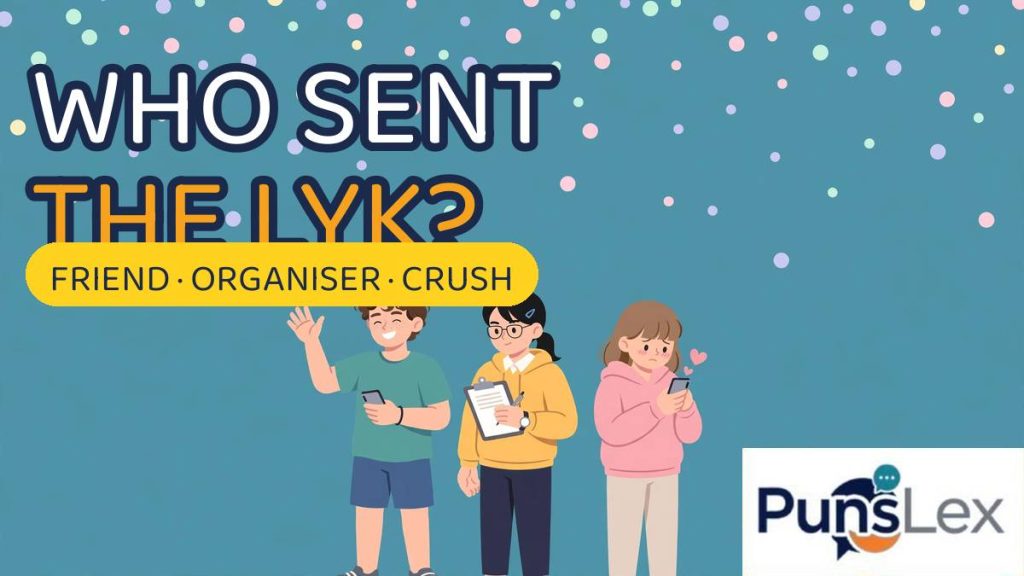
💬 What LYK Means From Different Senders
Three letters, four likely senders — and the sender is where most of LYK’s weight lives, because the same promise can be a kindness, a load-bearing plan or a soft way of saying not tonight.
From a Close Friend
The full-warmth reading. Between close friends, “lyk tonight” is pure reliability — the detail is pending, the promise is real, and the correct answer is a reaction, a “no rush”, or the next piece of news.
From the Group-Chat Organiser
Every group chat has one: the person holding the booking, the list and the headcount. When the organiser types “lyk”, it is load-bearing — the whole plan hangs on that promised message, and the chat quite rightly builds around it.
From a Crush or Date
The two-way reading. Typed by a crush about their own evening — “lyk when I’m free” — it can be genuine interest with a busy week attached. Typed for the third time with no follow-through, it is a soft step back. Read the record before the letters.
From Someone You Barely Know
From a near-stranger or a coworker, read LYK at its most literal: an IOU with no warmth implied either way. They are not stalling your life — they are queueing one message. Hold them to the timeframe, politely, and let the follow-through introduce them.
🏷️ The Standing Promise: When People Post LYK About Their Own News
A large share of LYK’s public life is posters flagging their own future messages — the update is theirs, the wait is everyone’s, and the letters label it before it lands. The self-directed use has its own three shapes:
- The placeholder post — a story that is only the letters: “lyk 👀” — the whole message is a promise that the sender’s own news is coming
- Before their own results — “interview done, will lyk how it went” — the sender booking their own report before they know its contents
- As a caption IOU — “part 2 tomorrow, lyk” — a creator owing the audience a sequel, and saying so where everyone can hold them to it
The standing promise works because it says the quiet part first. A poster who flags their own update has already done the audience’s waiting for them — what is left for everyone else is just the watching.
Differences Between LYK and Similar Acronyms 🔄
LYK belongs to the promise family of texting shorthand — the tags that manage a conversation’s future rather than carry its news — and its neighbours each handle a different direction of information:
| Abbreviation | Meaning | Example |
|---|---|---|
| LYK | Let you know | “train’s delayed — lyk when I’m close” |
| LMK | Let me know | “lmk when you’re outside” |
| FYI | For your information | “fyi the meeting moved to 3” |
| BRB | Be right back | “brb, door” |
The simplest split: its mirror twin LMK points the other way — LYK promises news, LMK requests it. What JP means takes the seriousness out of a joke just sent, while LYK eases an answer not yet ready. Its fellow chat-opener what WYS means asks what someone is saying now; LYK covers what gets said later.
Real-Life Examples of LYK in Texts 📝
The exchanges below follow patterns you will recognise from your own chats — swap the names and they still work.
The arrival IOU. “train just left the station” — “ok lyk when you’re two stops out, I’ll put the kettle on”
The results pledge. “interview done. no thoughts, just nerves” — “lyk the SECOND you hear anything”
The plan wobble. “can you do saturday?” — “maybe?? waiting on my shift swap. lyk by thursday, promise”
The soft raincheck. “tonight’s a no for me 😔” — “all good. lyk when you’re free tho, we owe ourselves a proper catch-up”
Why People Use LYK 💡
Three letters keep doing a job whole sentences do worse:
- It turns a non-answer into a plan — one promise holds the thread open without inventing a fact to fill it
- It is kinder than silence — the chat learns that an answer exists and is coming, which is most of what waiting minds want
- It buys thinking time honestly — the sender who types LYK has admitted the answer is pending instead of bluffing one
- It is faster than the alternative — “lyk tonight” does in three letters what “I will check and get back to you this evening” does in a sentence
Common Mistakes When Using LYK ⚠️
Even regular texters trip on the same few things:
- Reading the mirror backwards. LYK and LMK differ by one letter and opposite directions: one promises news, the other requests it. Sending the wrong twin starts the wait at the wrong end.
- Promising with no trigger attached. “lyk” plus no when and no what is a fog, not a promise — name the event or the hour the update rides on.
- Dropping it into formal threads. In a work email or a message to a teacher, the casual reading never arrives; write “I will let you know” in full.
- Letting it expire. A LYK that never lands teaches the chat to stop waiting — and to stop asking. The follow-up is not a bonus; it is the message.
Fun Facts About LYK 🎉
- Read it aloud and LYK comes out as “like” — Wiktionary prints its pronunciation /ləik/ — which is why a spoken “I’ll lyk” can sound, for one confusing second, like a compliment.
- The misreading has history: in early-2000s chatspeak, “lyk” was also typed AS the word “like” — old Urban Dictionary entries preserve lines like “he iz lyk so hawt”, a spelling nobody defends today.
- Its mirror twin LMK is exactly one letter away and points in precisely the opposite direction — few pairs in texting pack a whole reversed conversation into a single swapped letter.
- In Afrikaans, lyk is an ordinary word twice over: a noun meaning a corpse, and a verb meaning to look or appear — the same three letters, keeping very different promises.
LYK Alternatives You Can Use 💬
When the bare letters feel too clipped for the reader, these make the same promise with the warmth left in:
- “You’ll be the first to know” — the deluxe version; it promotes the reader to the front of the queue
- “Will update you tonight” — the promise with its deadline worn openly; best for plans and work-adjacent chats
- “Watch this space 👀” — playful, and it turns the wait itself into part of the announcement
- “News as soon as there is news” — the honest form for results and repairs, where nobody controls the timing
Choose by what the wait still needs. A timeframe settles most chats kindly; a wait with no clock on it needs the sender’s record, not a longer sentence.
How LYK Reflects Modern Texting Culture 🌟
LYK is a small fossil of how texting matured. Early shorthand saved characters; modern shorthand manages time. Nobody needs three letters to save money any more — the letters survive because they let a whole group chat agree, in one beat, on who owes the next message.
Where what STG means adds an oath to a claim so it lands harder, LYK adds a promise to a plan so it lands softer — one family pins weight on, the other pins it off.
Using LYK in Professional vs Personal Contexts ⚖️
Professional: Keep LYK out of formal email, applications and messages to anyone senior — but its full form is a workplace staple. “I will let you know by Friday” is a complete professional sentence; the clipped letters are for internal chats that already run on shorthand and shared context.
Personal: This is its home ground. Friends, family chats and group threads all supply what the letters need — a plan in motion, a known sender, and the trust that lets a three-letter promise hold an evening together.
Quick Tips to Master LYK 💡
- Watch kept promises before you send one. Notice which senders’ LYKs always land — the trigger, the timeframe, the follow-through — and copy the reliable shapes.
- Match the emoji to the meaning. A 👀 makes it a teaser; a 👍 makes it logistics; nothing at all makes it a gamble.
- Promise only what you control. News you are also waiting on deserves the honest form: “lyk when I hear” keeps the chain visible.
- Check the room for the mirror. In a fast thread, LYK and LMK blur — if the direction matters, spell the extra word out.
🔤 Other Meanings of LYK You Might Run Into
In a chat, “lyk” is the promise — but the same three letters hold a few unrelated jobs in the wild, and context tells them apart:
- Chatspeak “like” — in early-2000s leetspeak, lyk was a stylised spelling of the word “like”; it survives in old screenshots and ironic throwback posts, and explains most confused first readings
- Afrikaans “lyk”, the noun — in Afrikaans, lyk is a dead body or corpse, an everyday dictionary word far from any group chat
- Afrikaans “lyk”, the verb — the same spelling also means to look or to appear: “dit lyk goed” is “it looks good”, which makes LYK the rare initialism that is also a compliment in another language
If the letters trail a plan in a chat, they are the promise. If they sit in an Afrikaans sentence or a twenty-year-old screenshot, you are reading a different set of letters entirely.
🚫 Common Mistakes When You Receive or Send LYK
- Reading the promise as a brush-off. A kept LYK is consideration wearing short clothes. Judge the follow-through before grading the letters — most senders mean the IOU exactly as typed.
- Taking the IOU and dropping your end. When a sender flags a future update, the flag was them being organised. Answer the promise, not the wait it creates.
- Demanding the answer inside the LYK. Replying “just tell me now” to a genuinely pending answer converts a plan into an argument — readers can tell, and the attempt reads worse than the wait.
- Letting it loose at work. A promise this clipped has no place in formal threads — for the full form with a deadline, “I will let you know by Friday” is the sentence to send; for a clean three-letter sign-off instead, what CYA means is the closer built for leaving.
📝 25+ Replies to LYK for Every Tone
Thirty copy-paste answers follow, sorted by the mood you are answering in — because a friend’s reliable IOU and a planner’s third raincheck are two different problems wearing the same three letters.
If the exchange turns tender rather than practical — the news is about a person, not a plan — the sign-off family takes over: what LMY means covers the three letters that close a chat with affection. Pick by tone, and keep the two that sound like you.
Warm and Friendly
- “Perfect, I’ll be here — no rush 😄”
- “Thanks for keeping me posted, genuinely”
- “Deal. Kettle’s on standby”
- “Whenever you’re ready, I’m around”
- “Appreciate it — talk when you know”
Short and Sweet
- “👍 noted”
- “Sounds good”
- “Okay, waiting”
- “👀 on standby”
- “Got it, thanks”
Funny
- “The suspense is now a group activity”
- “I’ll just refresh this chat every four seconds then”
- “Cliffhanger behaviour. Noted and respected”
- “I’ll be staring at this chat like it’s a season finale”
- “Taking bets on the answer while we wait”
Playful Clapback
- “A promise with no deadline? Bold contract 😌”
- “Noted — the waiting room has snacks, apparently”
- “You owe the chat a drumroll when it lands”
- “IOU accepted. Interest: one extra detail”
Honest: When the Waiting Is the Problem
- “Fair — but I need a rough when, not just a lyk”
- “Third lyk this week — I need the actual plan this time”
- “All good, just don’t leave me hanging till the day itself”
- “I believe you. My calendar is less trusting though”
Busy but Kind
- “👍 in meetings — read it when it lands”
- “No rush my end, swamped here too”
- “Got it — ping whenever, I’ll catch up tonight”
Keep the Conversation Going
- “Deal — and if it’s a no, lyk that too, yeah?”
- “Okay but guess first: yes or no?”
- “Waiting! What’s your gut saying meanwhile?”
- “Noted. Now tell me everything else while we wait”
FAQs
1. What does LYK mean in text?
LYK means “let you know.” It is the promise typed when an answer is owed but not ready — a plan unconfirmed, news still pending, a journey unfinished — and it books the sender’s next message instead of leaving the chat in silence.
2. What is the difference between LYK and LMK?
Direction. LYK points forward from the sender: I will tell you. LMK points back at the reader: you tell me. One letter swaps who owes the next message, which is why the pair causes more mix-ups than any other in texting.
3. Is LYK rude to send?
Rarely, with its follow-through attached. “lyk tonight” reads as considerate; a bare “lyk” repeated for days, with no update behind it, reads as a stall. The timeframe and the record settle which one you sent.
4. How do I reply when someone says LYK to me?
Match the temperature. A casual “lyk 👀” earns a “👀 noted” back; a plan-critical one earns a friendly “by when?” while the asking is still easy. If the wait itself is the problem, say so once, kindly, and let the record argue.
5. Does LYK have other meanings?
A few, far from the chat. In early-2000s chatspeak the letters spelled the word “like”; in Afrikaans, lyk is both a corpse and the verb “to look”. In a modern text thread, though, the promise is the only reading in play.
Conclusion
LYK means “let you know” — three letters that owe the chat a message and say so at the same time. Read the sender, the trigger and the record behind them, and the reading stops being a guess: a kindness from friends, a hinge from the organiser, a raincheck from a crush.
Keep it for casual chats where the plan and the friendship are both real, and spell the promise out in full everywhere else. For the listing itself, Wiktionary’s entry for lyk files the letters as an internet-slang and text-messaging initialism of “let you know” — a promise, dictionary-stamped.



One Comment